Josiah C. Josiah
A conversation with Josiah C. Josiah about his plant studies, color research, and his recent travelling exhibition, Get Your Hands Dirty.
Rejoice Anodo
Chief Editor
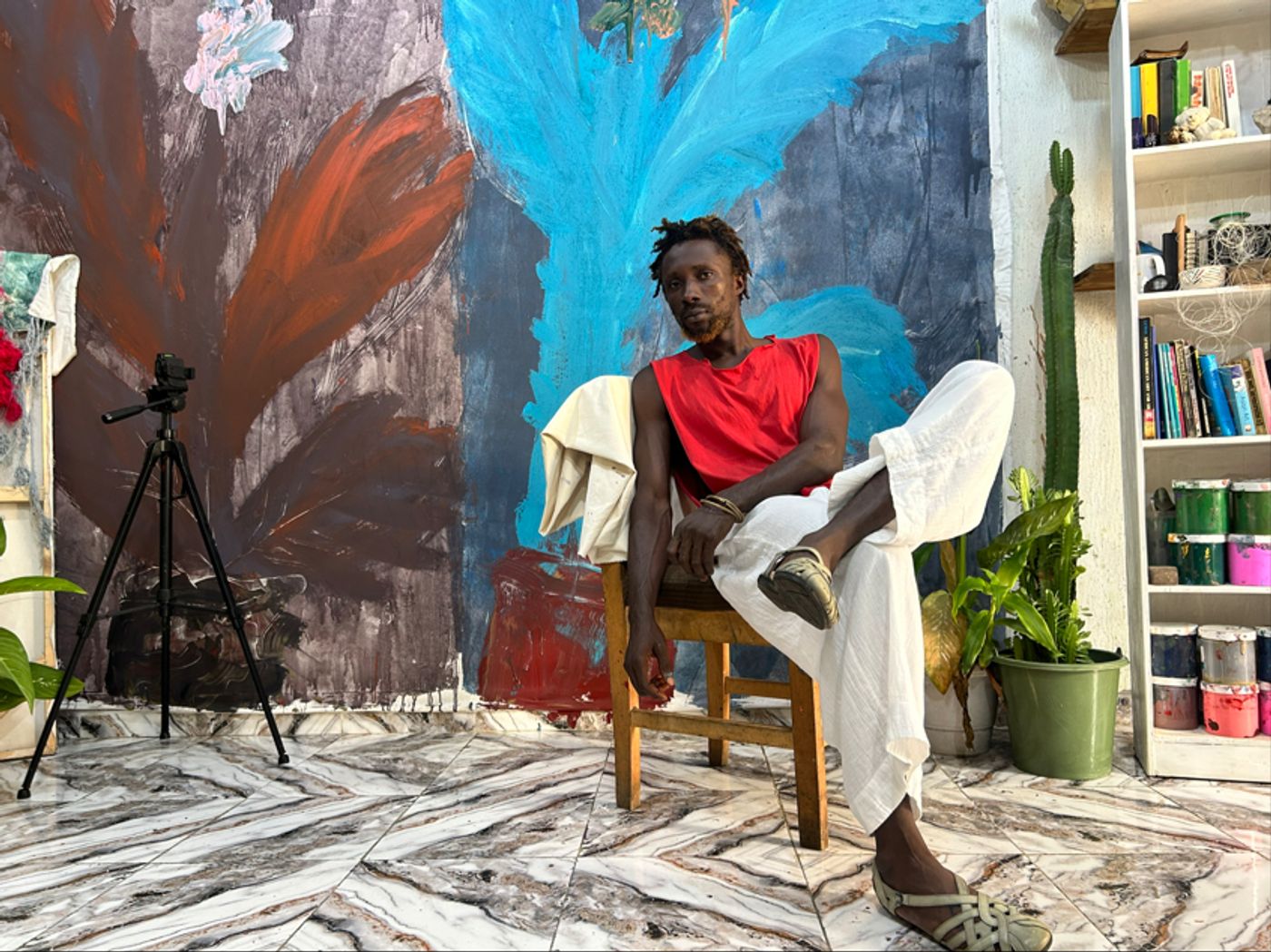
In May 2026, Josiah C. Josiah embarked on an interstate road trip between Lagos and Abuja. This drawing tour titled Experience and Interpret brought him together with artists, craftsmen, curators, and gallerists in these places to discuss how their immediate environment shapes colour and material choices in individual art practice.
His colour research spanned multiple field trips and centred on one question: what would African art look like if it focused on the colours found within it? The resulting body of work, deeply rooted in themes of culture, ecological conservation, and adaptation, offered an answer. From it came Get Your Hands Dirty, a solo art exhibition curated by Adebimpe Ajarat.
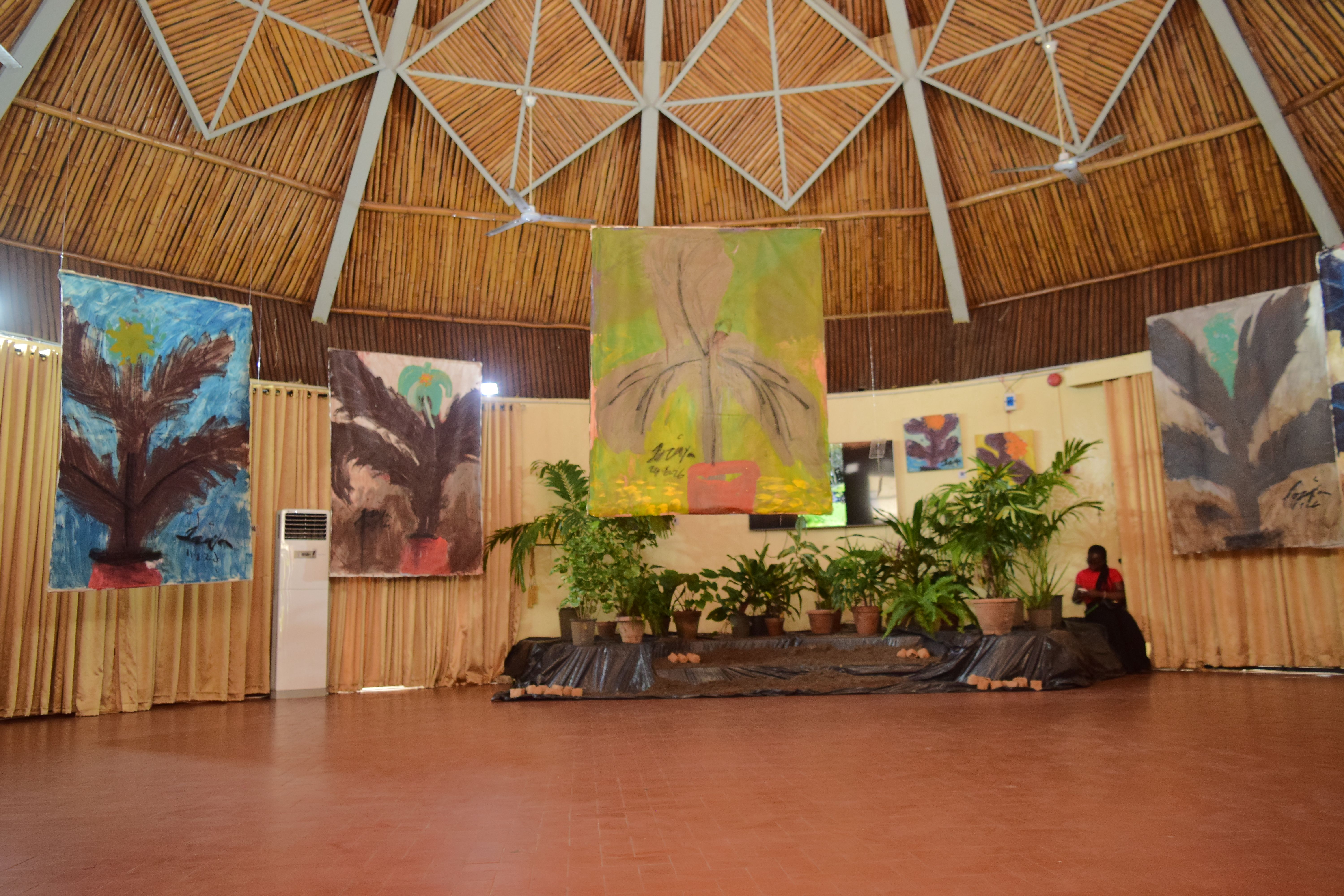
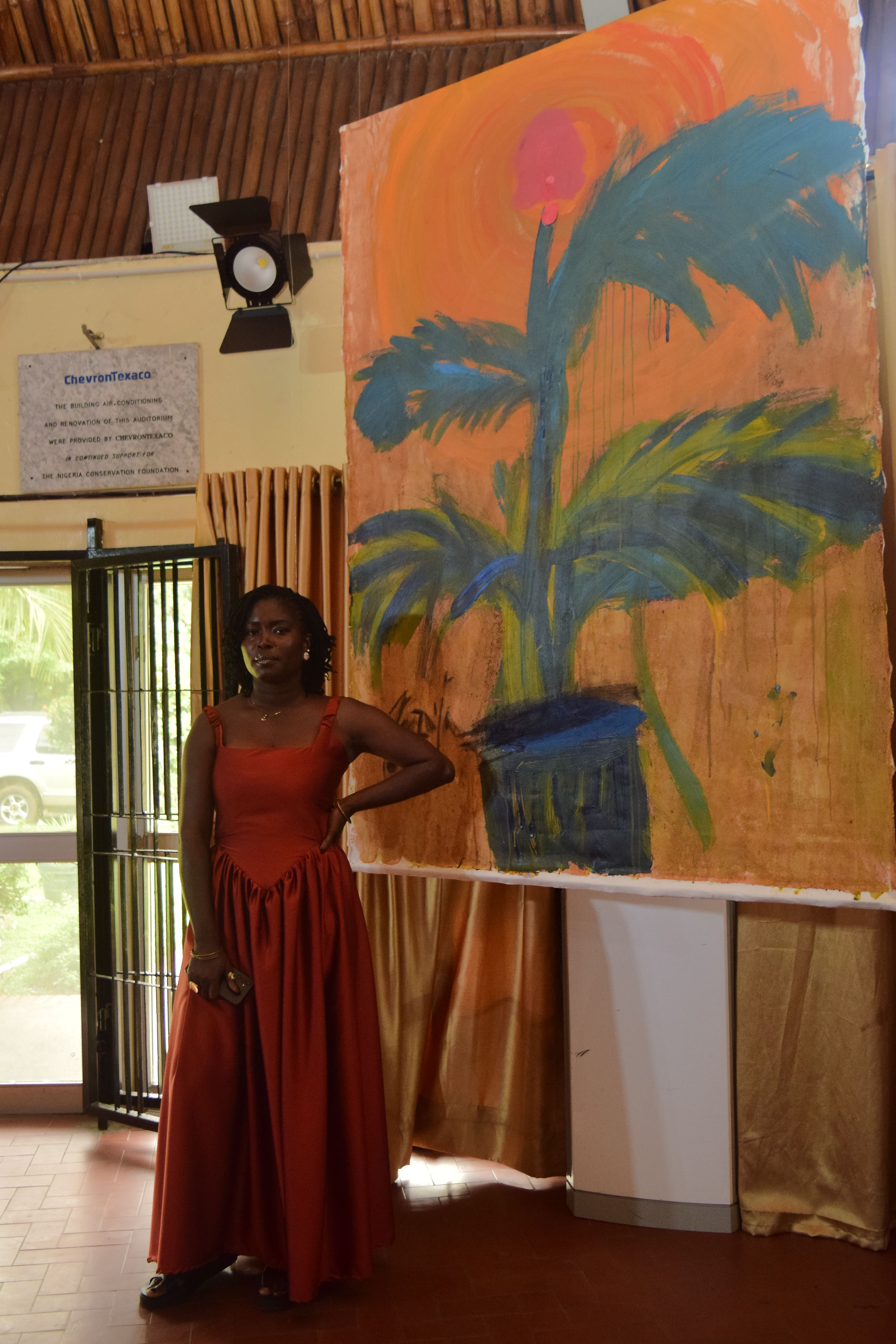
At the Lekki Conservation Centre, Josiah and Adebimpe set up an immersive installation in a hall within the premises. Large strips of canvas lined the domed ceiling, wrapping visitors in a panoramic scene of giant plants. Made from earth, charcoal, acrylic, and other materials on canvas, these works presented Josiah’s reimagined take on landscape.
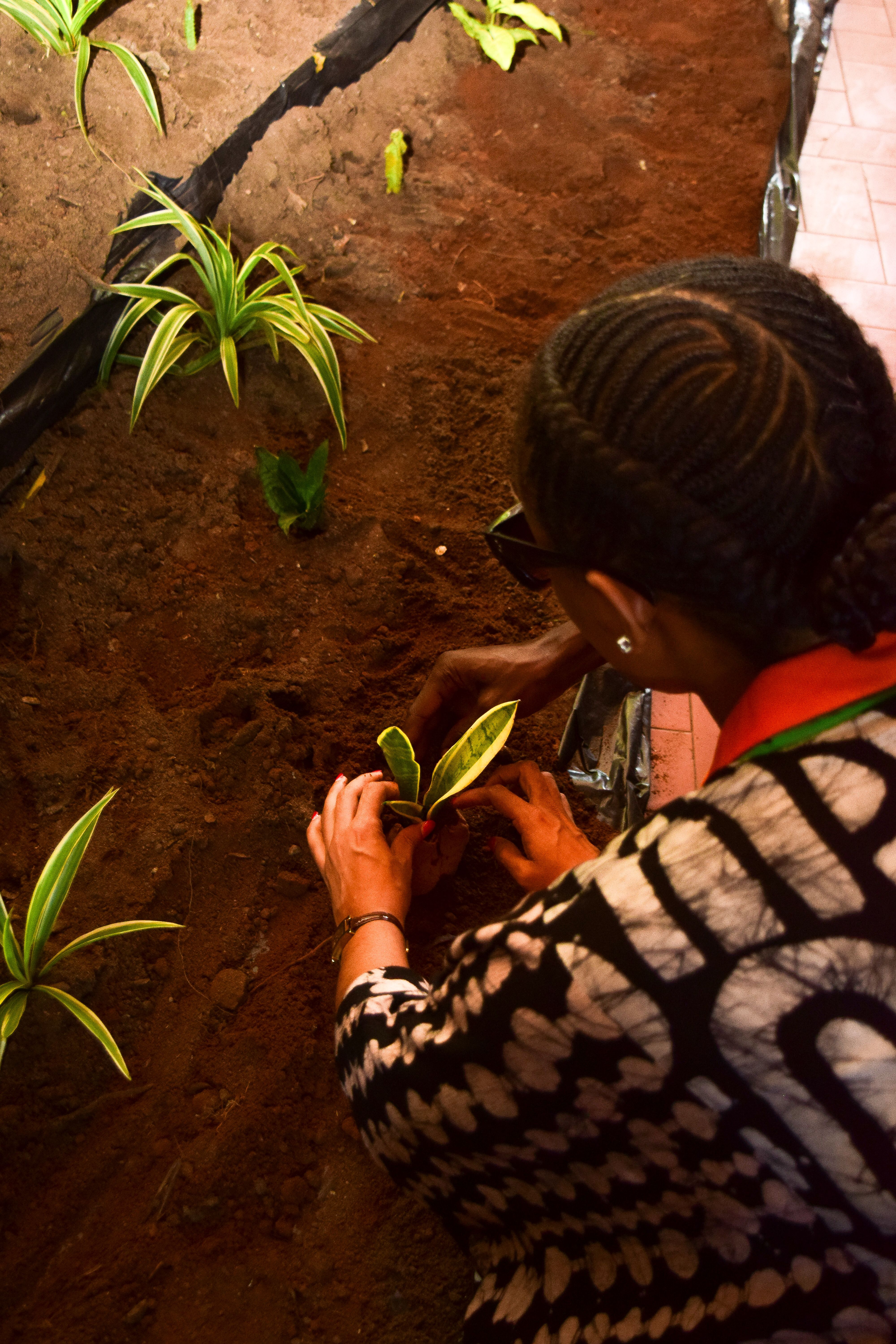
Opposite the entrance, a rectangular bed of loam soil held live plants on stretched polythene strips. Visitors could take a plant home. In the background, a documentary of Josiah’s field studies and creative process played on a loop on a television.
Here, Josiah shares a bit of his creative process for Get Your Hands Dirty and his plans for what comes next.
Rejoice Anodo: How did your formal training at Auchi Polytechnic shape the visual language you work in now?
Josiah C. Josiah: My training at Auchi Polytechnic required intense hard work, discipline, and long hours of practice. This practice has shaped my consistency in creating art. It has also enhanced my love of colour studies and drawing.
RA: Beyond painting, you’re also a writer, photographer, and curator. How do these disciplines feed into your practice as an artist?
JCJ: As an artist, your creative experience is wide. A wider range of creativity, such as photography and writing, is almost inevitable. I also curate based on my love of bringing a creative idea to life. So, none of these is feeding into my practice; they are all part of my practice.
RA: Your practice between 2020 and 2022 dwelt heavily on human figures, introspection, and collective memory. How did it evolve from this to your current environmental, plant-based focus? Was there a specific moment that spurred this change?
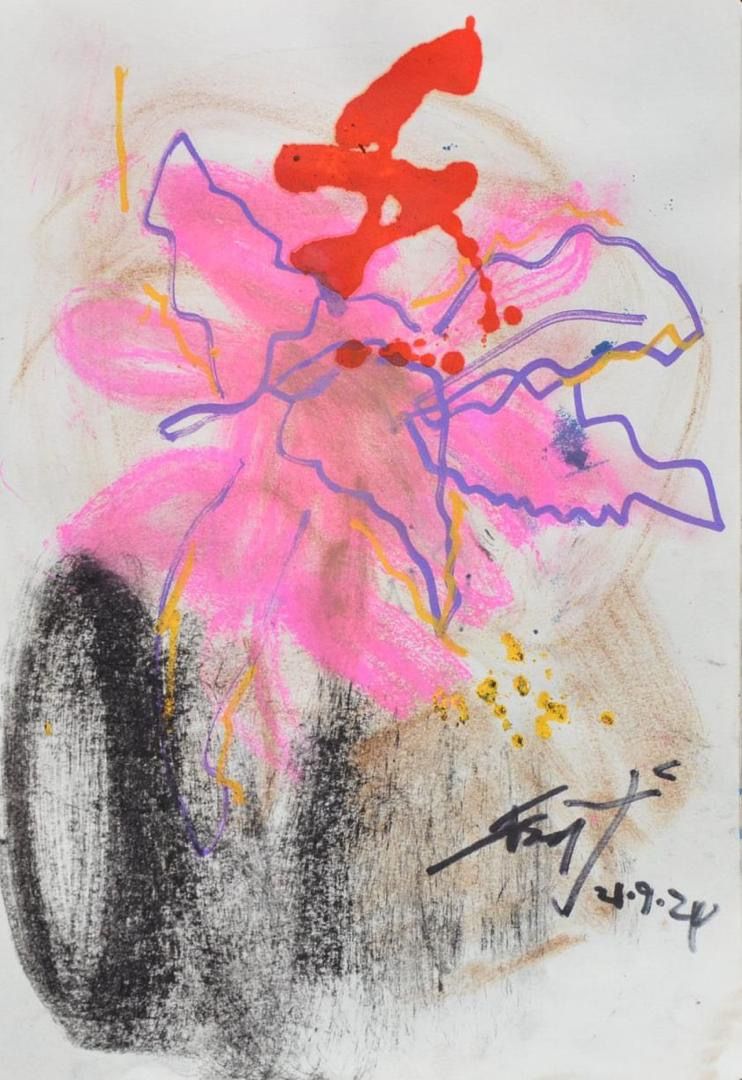
JCJ: My work has always been within the range of environmental consciousness. These have always been seen by the landscapes, plants, trees, and birds. But I have these plant-based works because it’s a shift to colour study.
These plant studies were enhanced during residencies I participated in: Tarkwa Bay in 2024 and the Iseyin Residency that I curated. During my solo show, UNFRAMED at Rele Gallery in 2024, I always went out to meditate in the garden outside the gallery. Then and there, I felt the plants and flowers differently than I have before.
These spaces gave me room for proper study and appreciation.
RA: Are there any artists (within Nigeria or internationally) whose careers have influenced your art practice? Which emerging artists do you think collectors and curators should pay attention to?
JCJ: Generally, artists who have been consistent in their practices and whose works transcend over time inspire my work. Artists whose lifestyles communicate with their work, who live and create beyond the rules. And I admire the same energy from emerging artists.
RA: Get Your Hands Dirty was curated by Adebimpe Ajarat. How did both of you develop the concept together?
JCJ: The concept was developed when we were both trying to analyse and trace the inspiration behind the new body of works. I explained how the process is most important to me in my work, and her ability to conceptualise the ideas behind that brought us to Get Your Hands Dirty.
RA: The curatorial statement describes your work as stripped of complex detail, focused strictly on shapes, structure, and colour. What made you choose this reduction, as opposed to elaborate botanical detail frequently addressed in plant-based drawings?
JCJ: My work has always been about representation rather than imitation. This body of work is mostly about colour and its environmental influence, not an intricate representation of the object. If you also look closely, you’ll see the details are underplayed, with lines representing the plants’ veins and other details of the stems and even the pots.
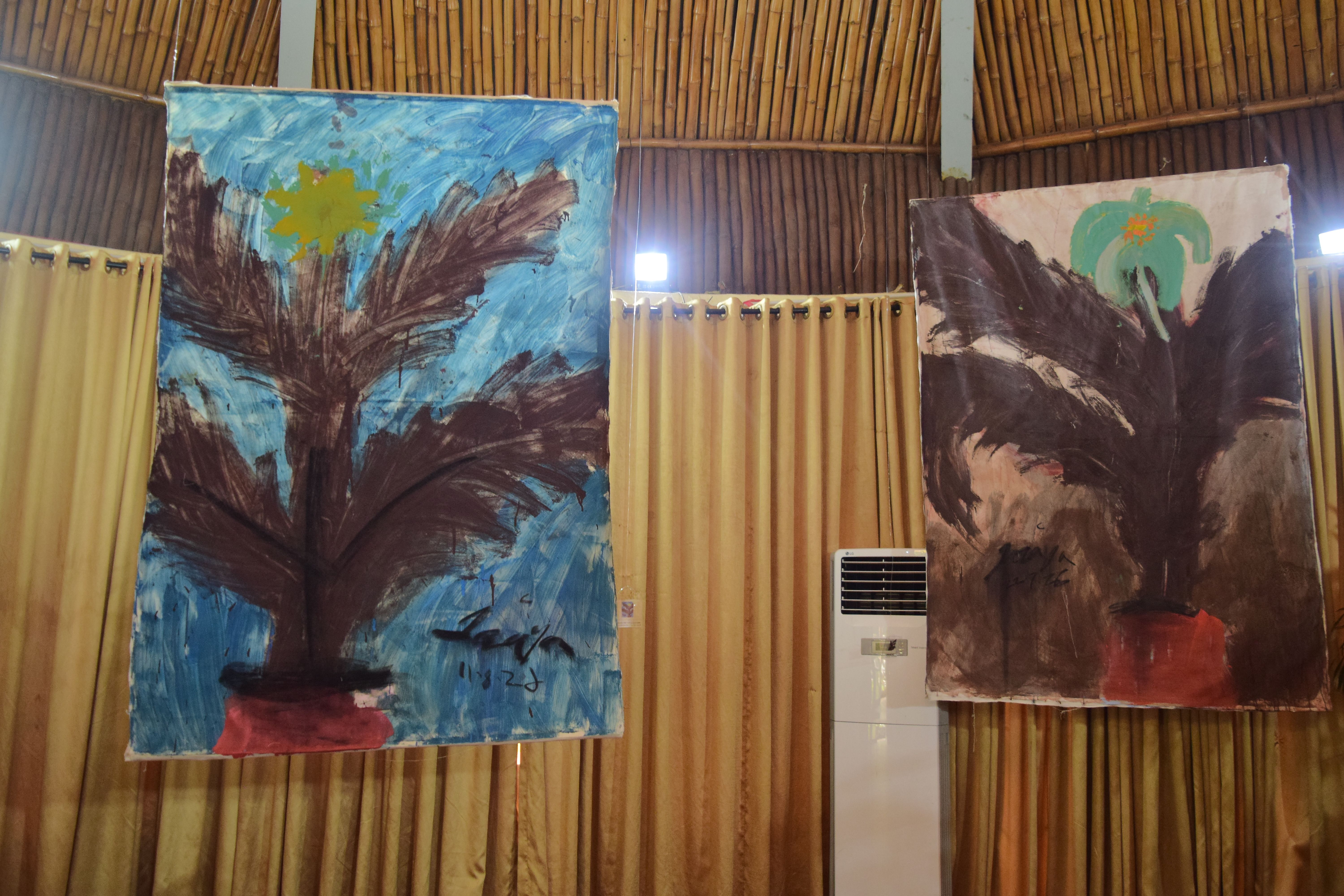
RA: In Itele Evening Sun (2026), the sun is red. In Earth Plant (2026), Earth Touch I (2026), and Different But Same (2026), single stems bear leaves with different colourations. What was your process for observing and translating these phenomena onto canvas?
JCJ: Simply experiencing. You observe and create better when you allow yourself to be present.
RA: Soil and plants were displayed at the centre of the exhibition hall, alongside the paintings. What was the significance of this setup?
JCJ: Since the process is what we want the audience to feel, bringing in a living plant and, most importantly, engaging the audience in the process by literally getting their hands dirty while they transplant our plant was the practical concept of the show.
RA: There’s a video component alongside the paintings in Get Your Hands Dirty. What does it show?
JCJ: The video is a short documentary and a compilation of my different experiences and field studies of the environment in my various trips, along with a narration of the concept of the exhibition.
RA: How do you see environmental and ecological themes being taken up by other West African contemporary artists? Is this a growing movement?
JCJ: During my travel tour a few months ago, I observed that the most visual artists are influenced by their environment unconsciously. I’m not sure how prominent and intentional the ecological influences are for most visual artists or how quickly the movement is growing.
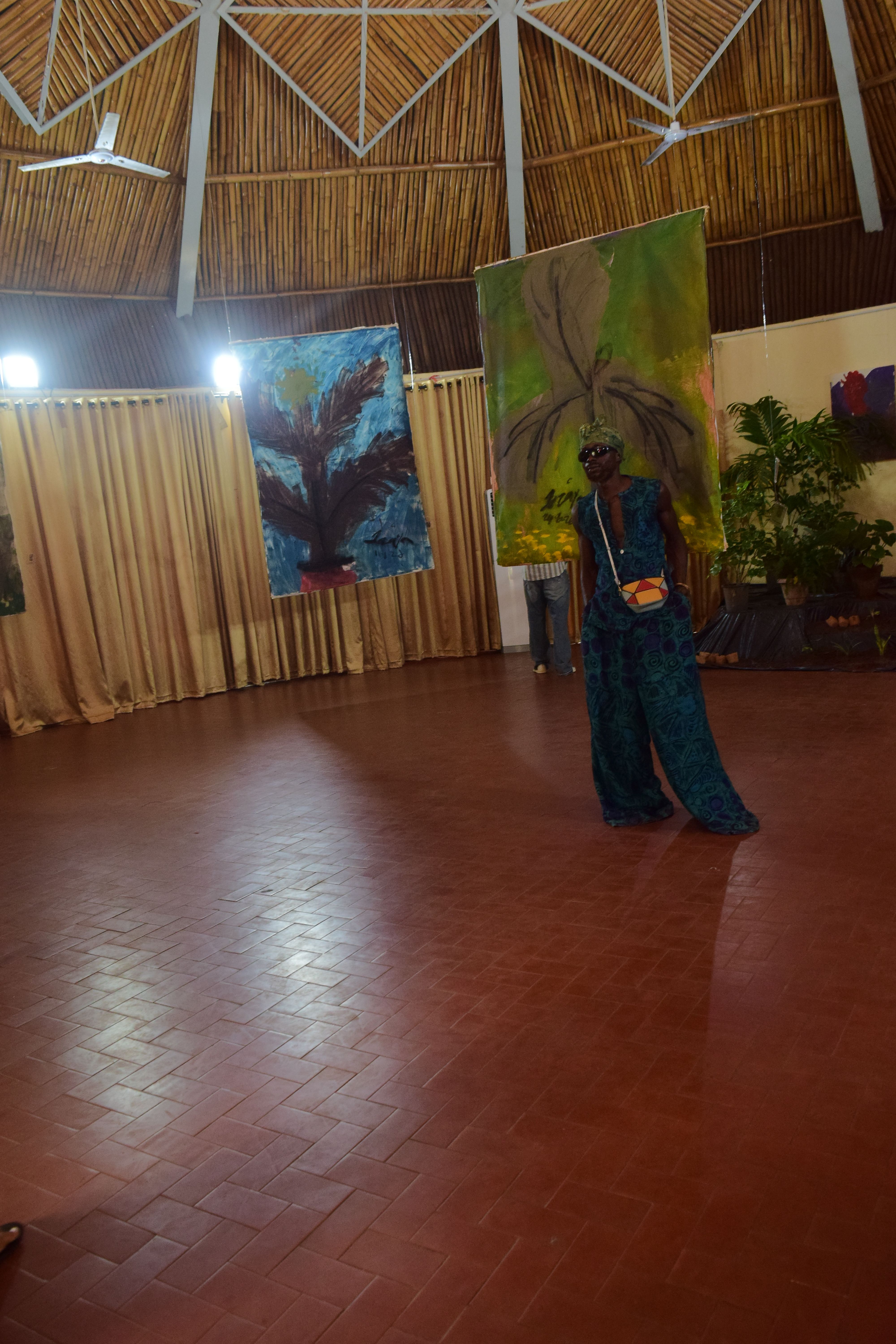
RA: Lekki Conservation Centre is an actual working conservation site. What made this location chosen for the show as opposed to a conventional art gallery?
JCJ: Showing the launch of the exhibition at the conservation centre, which serves as a premier nature reserve, environmental education hub, and centre for ecotourism, research, and biodiversity conservation, was absolutely intentional—an alignment with what the exhibition is all about.
RA: Is Get Your Hands Dirty a one-time show for the Lekki Conservation Centre or touring exhibition? If yes, will it remain as a fixed body of work or adjust to fit the ecological and environmental concerns of each new location?
JCJ: Yes, it is a travelling exhibition, not necessarily a fixed body of works, but they all align to fit ecological and environmental concerns. Each location will determine the concept of display and curation.
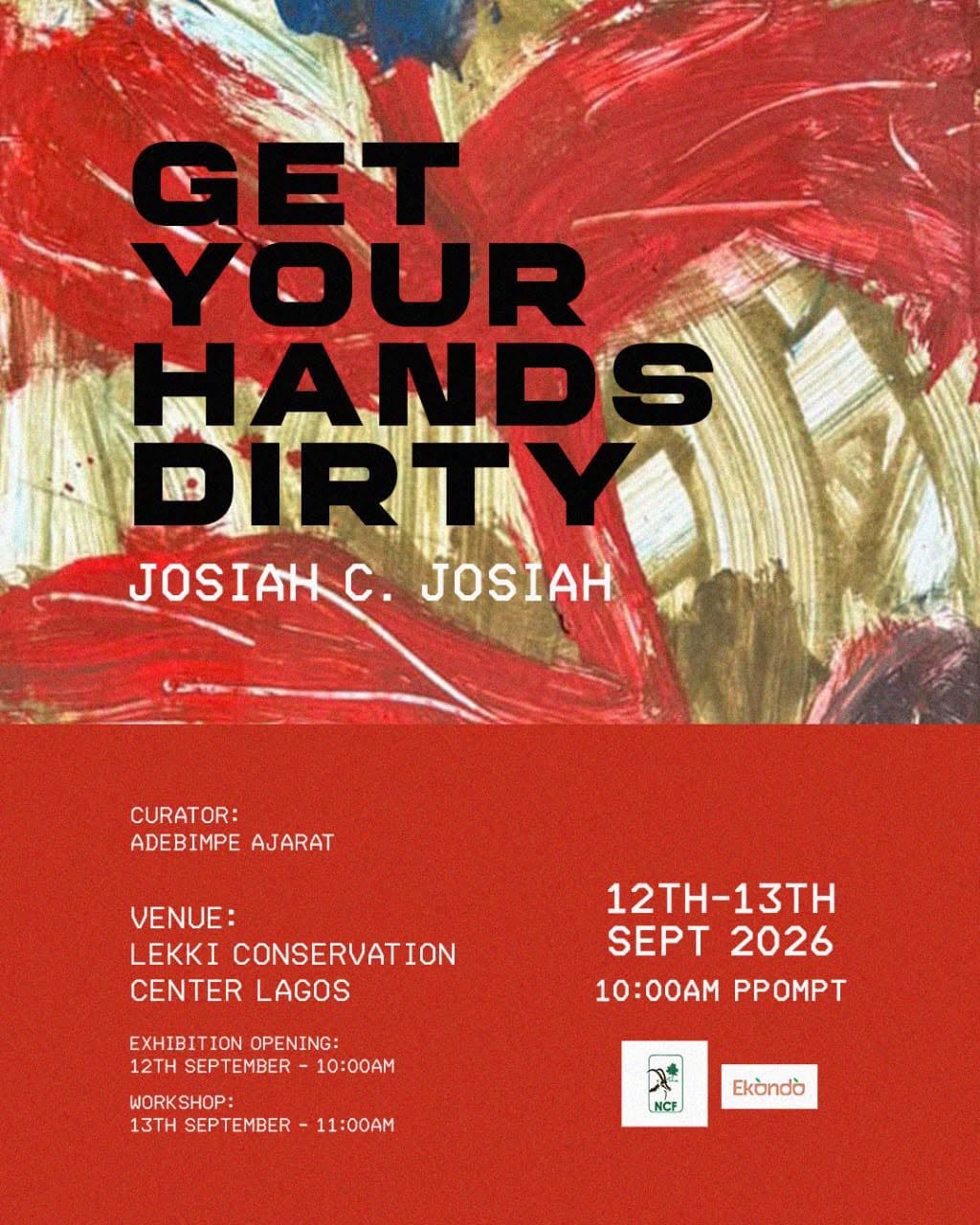
Get Your Hands Dirty opened at the Lekki Conservation Centre on September 12, 2026. On the 13th, a paint and plant workshop was held at the Professor Obot Orchid Garden within the conservation centre. The show closed on September 18, 2026. The Get Your Hands Dirty campaign will travel to other locations (not public at the time of this publication).