Anna Isatou Bah
A conversation with Anna Isatou Bah about ART27 Gambia, linocutting, relief printing, and her experience as the only professional female relief-making artist in The Gambia.
Rejoice Anodo
Chief Editor
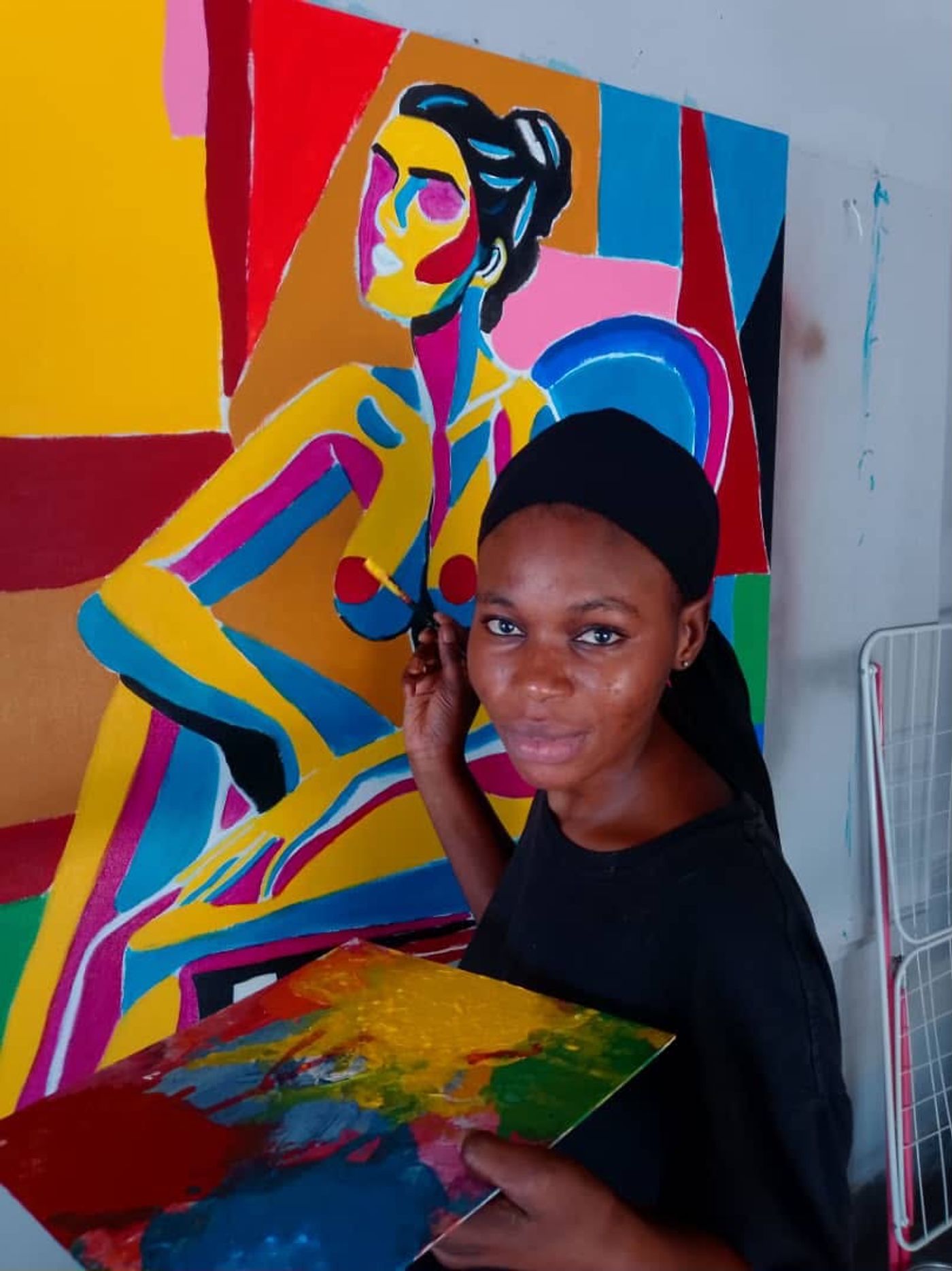
Anna Isatou Bah, a Gambian artist with focus on linocutting and woodcarving, is determined to place The Gambia at the forefront of West African art dialogue. She is a member of the Visual Arts Association of The Gambia and part of the ART27 collective, The Gambia’s leading visual arts group. With an upcoming residency in Barcelona and a workshop shortly after at the Canary Islands, Anna intends to widen the scope of her artistic practice, preserve The Gambia’s printmaking techniques, and influence upcoming artists from her region.
In this session, she shares the experience of the unique position she occupies: being the only female professional Gambian artist focused on relief print making.
Rejoice Anodo: What do you remember most vividly about the period you spent studying visual art?
Anna Isatou Bah: What I remember most vividly about studying visual arts during my school days is how it laid the foundational bedrock for my journey as an artist. It was there that I learned discipline, observation, and how to express complex ideas through painting. It was never just about learning techniques; it was about training my eyes to see the world differently and finding my own artistic voice.
The teachers were incredibly supportive, and the creative environment pushed me to innovate every day. That period truly shaped who I am today as a painter, and it gave me the exact confidence and preparation I needed to later join the ART27-Artist Group and expand my work into the field of printmaking.
RA: What mediums have you experimented with throughout your art career?
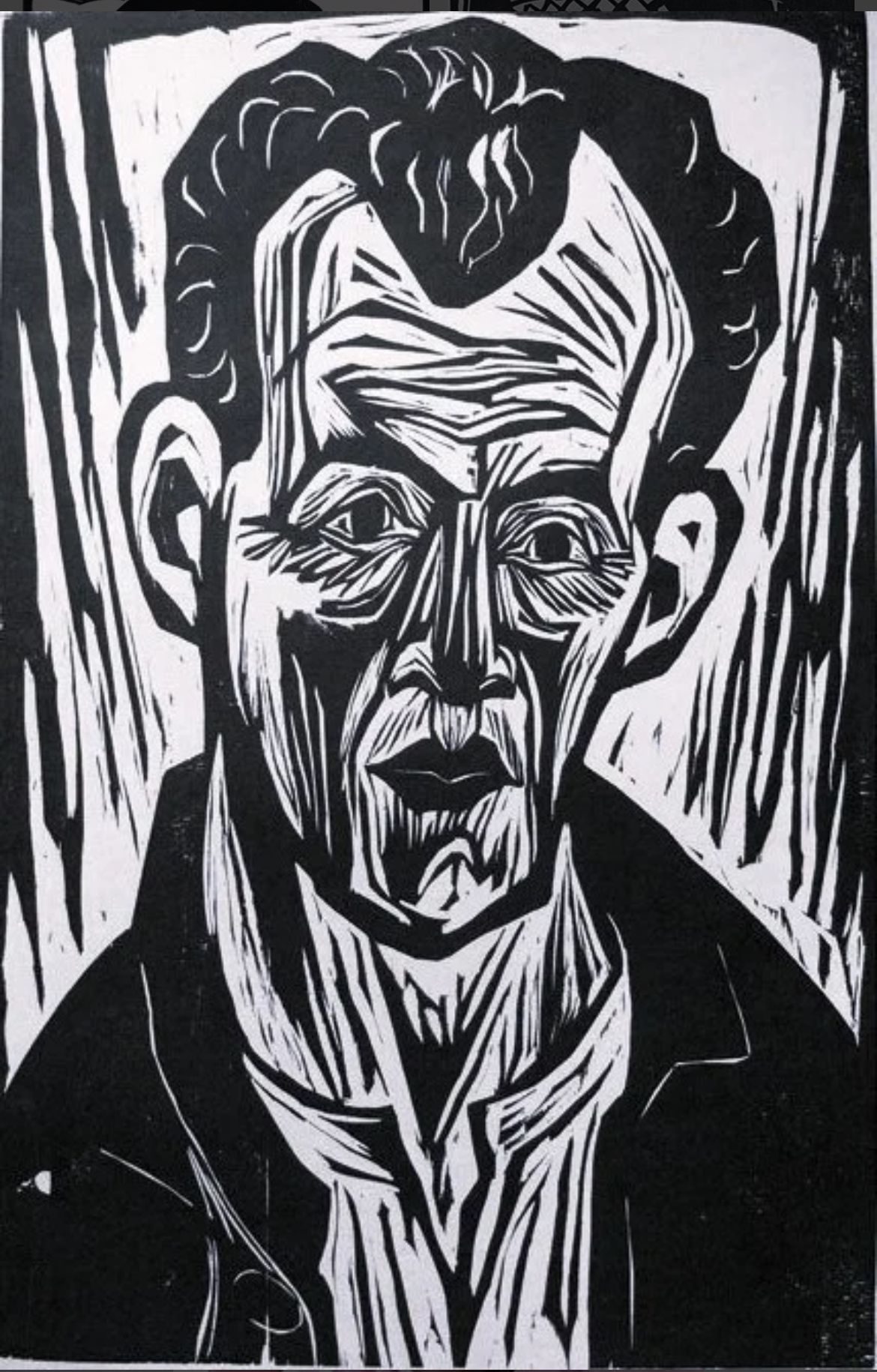
AIB: Throughout my art career, I have experimented with several mediums, though painting remains my core specialization. I began with pencil drawing and acrylics, and later moved on to watercolors to deepen my understanding of colour and texture. More recently, through the ART27–Artist Group, I began exploring linocutting and printmaking. Our founder, Mr. Ferry, provided me with the necessary professional tools and materials, which opened up an exciting new chapter for me: combining classical painting with traditional printmaking techniques. So, while painting is still the heartbeat of my work, lino and wood carving have now become equally vital mediums in my daily studio practice.
RA: Some media sources have suggested that you are the only professional female artist focused on linocut and woodcarving/printing. Is this true?
AIB: Yes, that is true. At the moment, I am the only professional female artist in The Gambia whose primary focus is relief printmaking, specifically linocutting and woodcarving on paper. This traditional technique has almost completely disappeared from the contemporary West African art scene, which is why my work with ART27 is so vital. Currently, I lead our dedicated carving and print section to ensure that this beautiful craft is not only revived but actively passed on to the next generation in The Gambia.
RA: Did you study the work of South African relief artists Azaria Mbatha and John Muafangejo? Your printmaking has been said to bear some similarities.
AIB: No, I didn’t actually study their work. I learned printmaking right here in The Gambia through ART27, under a tutor from the UK who introduced us to relief printing. While I am now familiar with the incredible legacies of Azaria Mbatha and John Muafangejo, I am deeply honored when critics see similarities in our bold lines and visual storytelling. My training is entirely rooted in ART27. My focus remains on developing a unique style and perspective born out of my own experiences here in The Gambia.
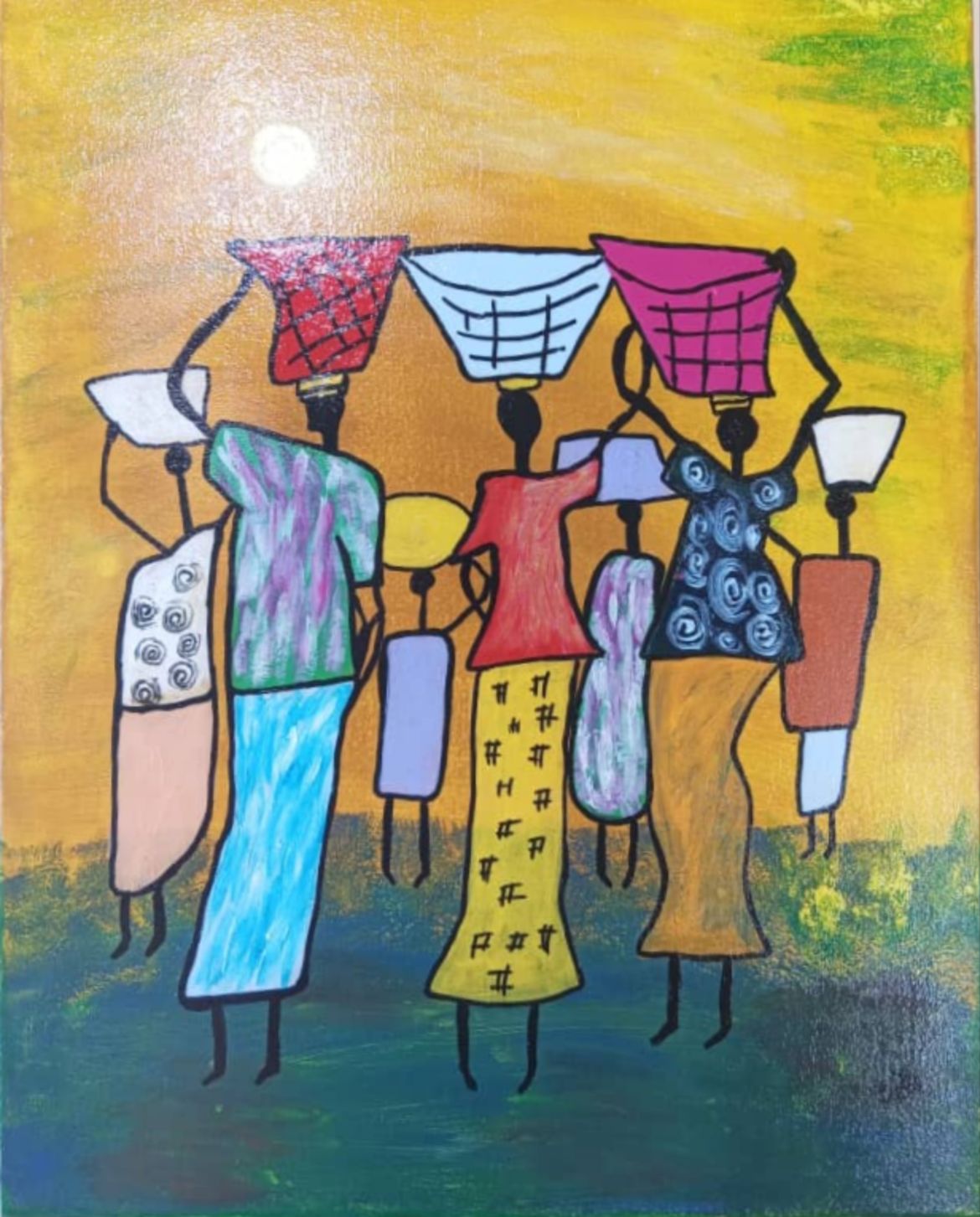
RA: What specific aspects of Gambian culture, history, and modern times do you include in your art creation?
AIB: First and foremost, I focus on the strength and resilience of Gambian women: capturing their daily lives in the family compounds, the vibrant energy of the markets, their expressions, and the intricate patterns of their traditional wrappers. I also draw deep inspiration from our heritage, from the soul of Kora music to village rituals and the oral storytelling I grew up with.
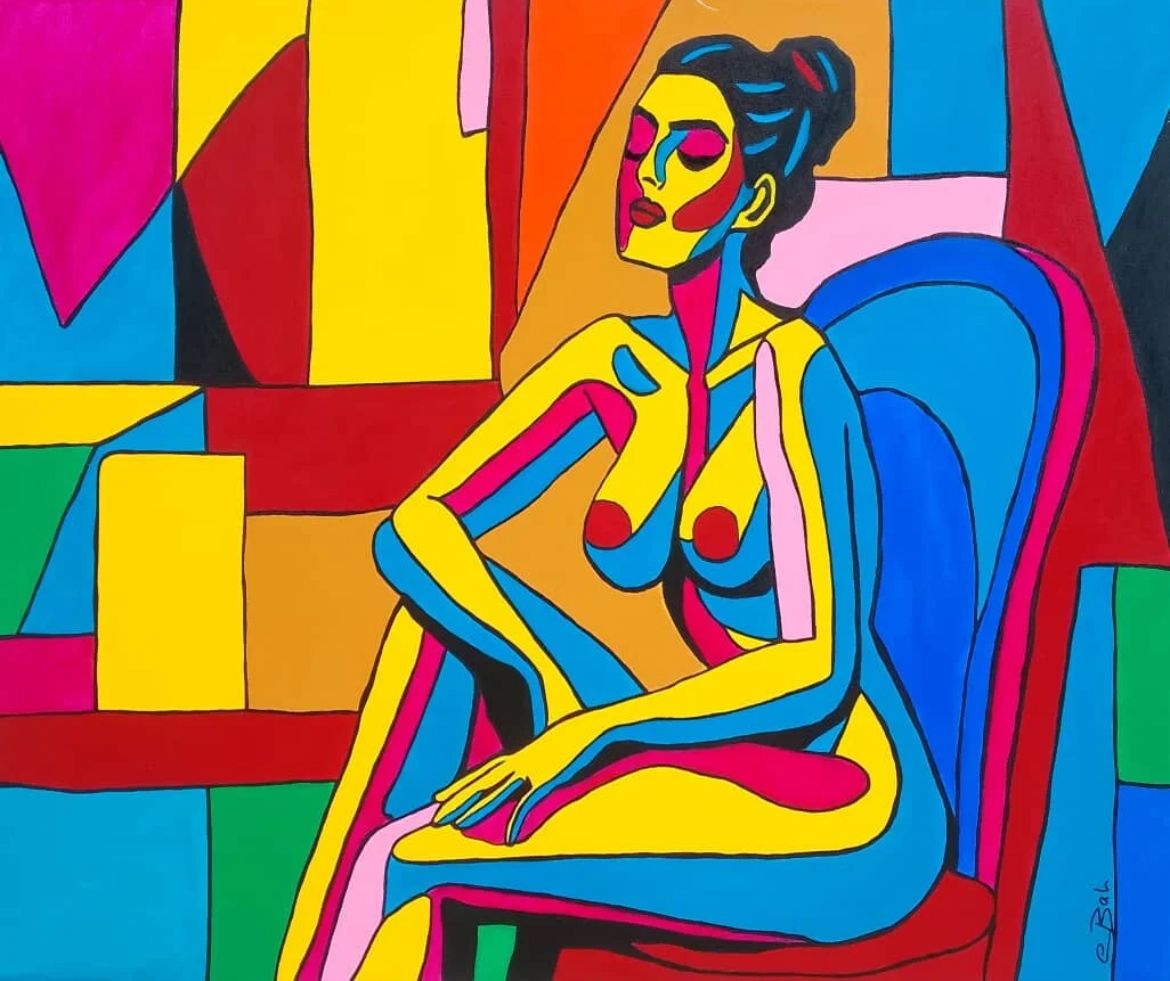
At the same time, I do not shy away from modern struggles; my work tackles heavy contemporary themes like youth unemployment and boat migration, though I always weave in a thread of hope. Visually, my style leans toward Art Brut, influenced by the bold expressionism of Picasso, Basquiat, and others, but the heart and the stories are entirely Gambian.
RA: Your mentor, Ferenc Donderer, has talked about the importance of a permanent contemporary art gallery in The Gambia. If this vision is actualized, what would it change for artists like you and the country’s ecosystem as a whole?
AIB: My mentor, Ferenc Donderer, has always championed this vision, and I agree with him completely. A permanent contemporary art gallery would be a massive turning point for our nation. For an artist like me, it represents professional dignity, offering a curated, serious space to exhibit my paintings and linocuts rather than having to rely on hotel lobbies or tourist street markets.
It means we can preserve our cultural heritage right here at home, instead of watching our finest art immediately exported to Europe. For our country's ecosystem, it changes everything: it will build a sustainable local art market, attract international collectors, create jobs, and serve as an educational hub. Most importantly, it gives Gambian children and students a physical space to see that our art is prestigious and highly valuable. It proves to the world that The Gambia is defined by its rich cultural identity, not just by tourism.
RA: What are the biggest issues Gambian artists face, and which of these affect you personally?
AIB: The challenges we face as Gambian artists are deeply structural. First, there is a critical shortage of art materials. We have no standard art supply shops here, meaning specialized printmaking tools, high-quality lino blocks, wood carving blocks, and printmaker inks are completely inaccessible locally. Even basics like high-quality canvases, stretcher frames, oil or acrylic paints, quality paper, charcoal, and pastels are incredibly rare to find.
I am entirely dependent on the ART27 group to source these essentials; without their logistical support, my physical creation would grind to a halt. The second major issue is a profound lack of professional infrastructure and institutional respect. Too often, fine art is dismissed as a casual hobby or cheap tourist souvenir rather than a rigorous profession. Because of this misconception, we suffer from a total absence of formal galleries, government funding, or local collectors.
Personally, these barriers affect me daily. Relying heavily on sponsorship just to secure raw materials creates a fragile environment for creativity. Furthermore, as a woman working in a highly physical medium like wood and linocut carving, the struggle for respect is doubled. I have to fight constantly to prove that my work is a sophisticated fine art that deserves serious investment and recognition.
RA: As a founding member of the ART27 - Artist Group, what does it mean to be part of this movement as a Gambian artist?
AIB: Being a founding member of the ART27-Artist Group means absolutely everything to me. For far too long, art in our country has been marginalized, particularly for women. ART27 is an active movement proving that art is a powerful profession and a vital catalyst for social change. It means we are no longer creating in isolation; we are building a genuine, supportive creative community right here at home.
As a Gambian, it empowers me to reclaim our narrative, ensuring that we are keeping our culture alive and telling our own stories from our own perspective, rather than letting outsiders dictate our identity. As the woman leading our carving and printmaking section, it gives me a profound sense of responsibility. I am here to open doors and show young women that they, too, can claim their space as serious, professional contemporary artists.
RA: How common is it for Gambian artists to need a second income to sustain their art practice? You mentioned running workshops to support your art.
AIB: It is incredibly common. In fact, nearly every single artist in The Gambia relies on a secondary income just to survive. Because we lack a developed domestic art market, consistent local buyers, or institutional funding, an estimated 90% of Gambian artists must work second jobs, many as teachers, sign writers, tailors, or fishermen.
For me, I sustain my practice by hosting linocut and woodcut workshops for tourists, youth groups, and local women. The revenue generated from these classes, alongside the critical infrastructure provided by ART27, is what allows me to purchase specialized inks, papers, and carving blocks while supporting my family. Running these workshops isn't just a financial necessity. It is what keeps my art physically possible.
RA: Are there any other emerging or established artists in the Gambia and West Africa that you follow closely or admire?
AIB: I have immense respect for my fellow Gambian artists, and we maintain a very close, deeply supportive community here. However, conceptually and stylistically, my work draws from a more global lineage. My deepest creative influences are Art Brut, Jean-Michel Basquiat, and Pablo Picasso. Even though they are no longer with us, their work speaks to me profoundly.
I spend a lot of time studying Art Brut, or 'Raw Art,’ through books and digital exhibitions online. I am completely captivated by how these artists used raw lines, bold figures, symbols, and text without confining themselves to rigid academic rules. That sense of absolute freedom mirrors my own approach. While my physical technique is grounded in relief printmaking, my creative spirit is rooted in Art Brut. I combine expressive textures, symbols, and text to tell the authentic, unvarnished stories of our people.
RA: As you have an upcoming residency in Spain this October, what do you hope to achieve from this experience?
AIB: I have an exciting residency lined up in Spain this October, pending my final visa approval, and I have major goals for this experience. First, I am heading to Barcelona to work in professional printmaking studios and visit the Picasso Museum, which is a deeply personal milestone for me since Picasso is one of my greatest artistic influences. I also plan to immerse myself in the city's vibrant gallery scene.
From there, I will travel to Tenerife in the Canary Islands to visit the TEA Museum, explore contemporary art galleries, and co-lead a mixed-media and linocut workshop alongside Caroline Jacob, a brilliant fellow ART27 member who is currently working on the island.
This residency is about much more than my personal growth. My main objective is to absorb new techniques, expand my international artistic network, and bring that wealth of knowledge back home to enrich and inspire young artists right here in The Gambia.