Ka ọ dị mgbe anyi g'afu ozo: In Conversation with Mary Osaretin Omoregie
Mary Osaretin Omoregie on grief, curation as care, and the commemoration of CCA's founder - Bisi Silva.
Rejoice Anodo
Chief Editor

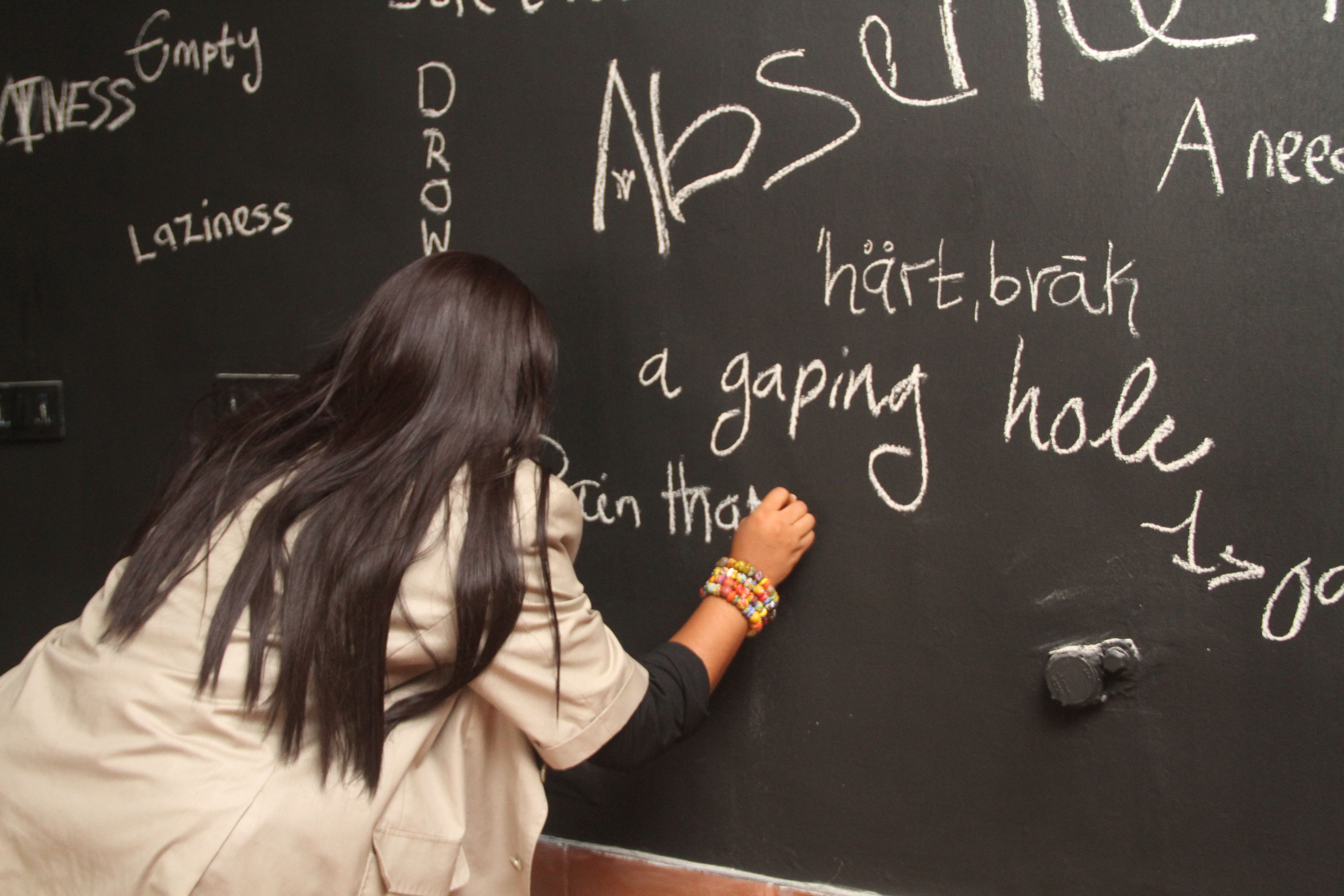
In a three-story building on McEwen Street in Yaba, the Centre for Contemporary Art, Lagos (CCA Lagos), has staged one of its best exhibitions yet. From the ground floor, Ka ọ dị mgbe anyi g'afu ozo enveloped visitors in a warm embrace, as if to say, “We know grief; we understand how you feel. Come in, write your tributes, see the different stages of grief exhibited by artists, lay down your burden, go home a lighter version of yourself, rest. Be at rest.”
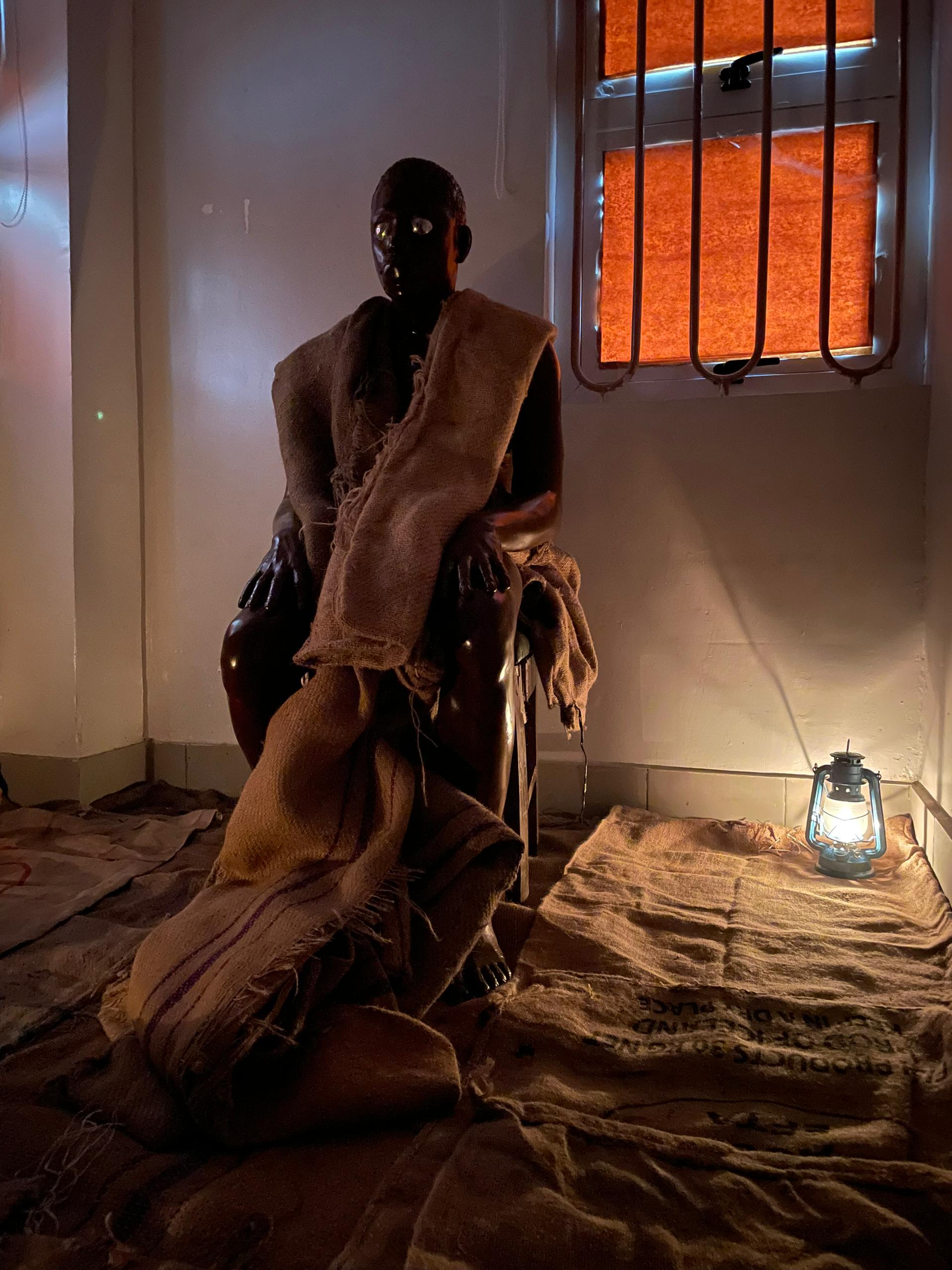
A book on a pedestal prompts visitors to write their tributes. Fresh flowers adorn one part of the hall, and wayfinding signs warn of impending triggers. One sign leads to a room at the end of the ground floor, where two lit lanterns illuminate a clay model draped with and surrounded by sackcloth. It is strikingly close to a real mourning room.
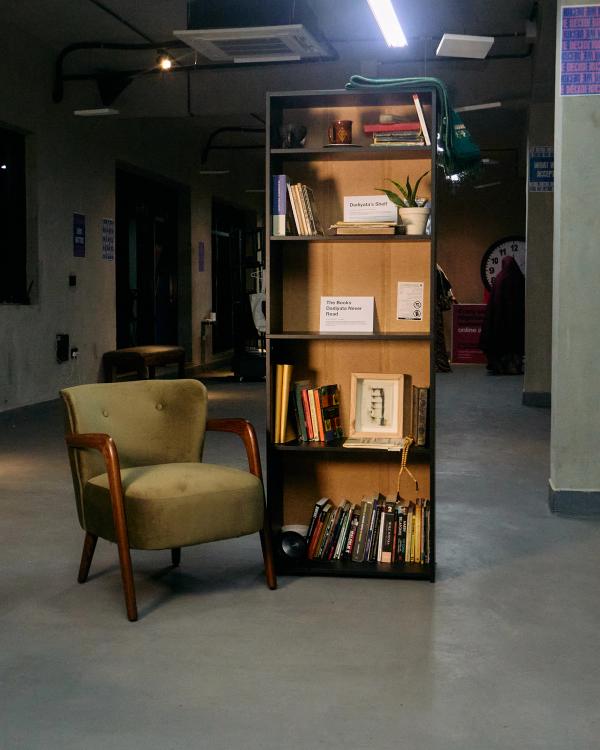
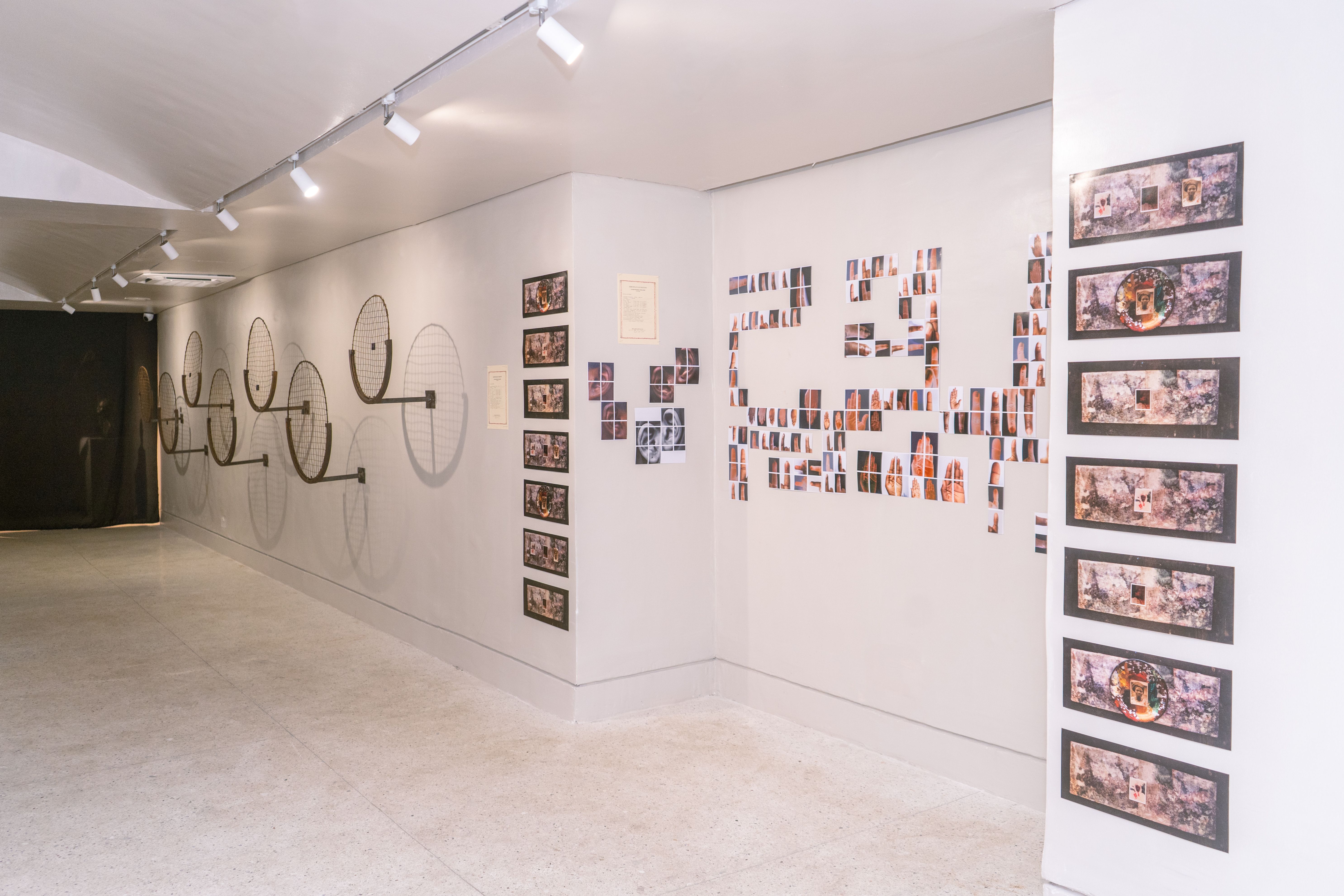
The first floor houses a series of drawings, photographs, memorabilia, and site-specific installations reminiscent of loss and death. In the same hall, the left corner, partitioned by a dark curtain, holds an intimate listening space, while the right corner is a darkened nook with a projector, where Ofem Ubi’s Back on Home Soil plays.
The second floor continues the conversation with more installations, images, and drawings. It carries a feeling of closure: the concentration of actual loss is heightened here, the pinnacle of the exhibition.
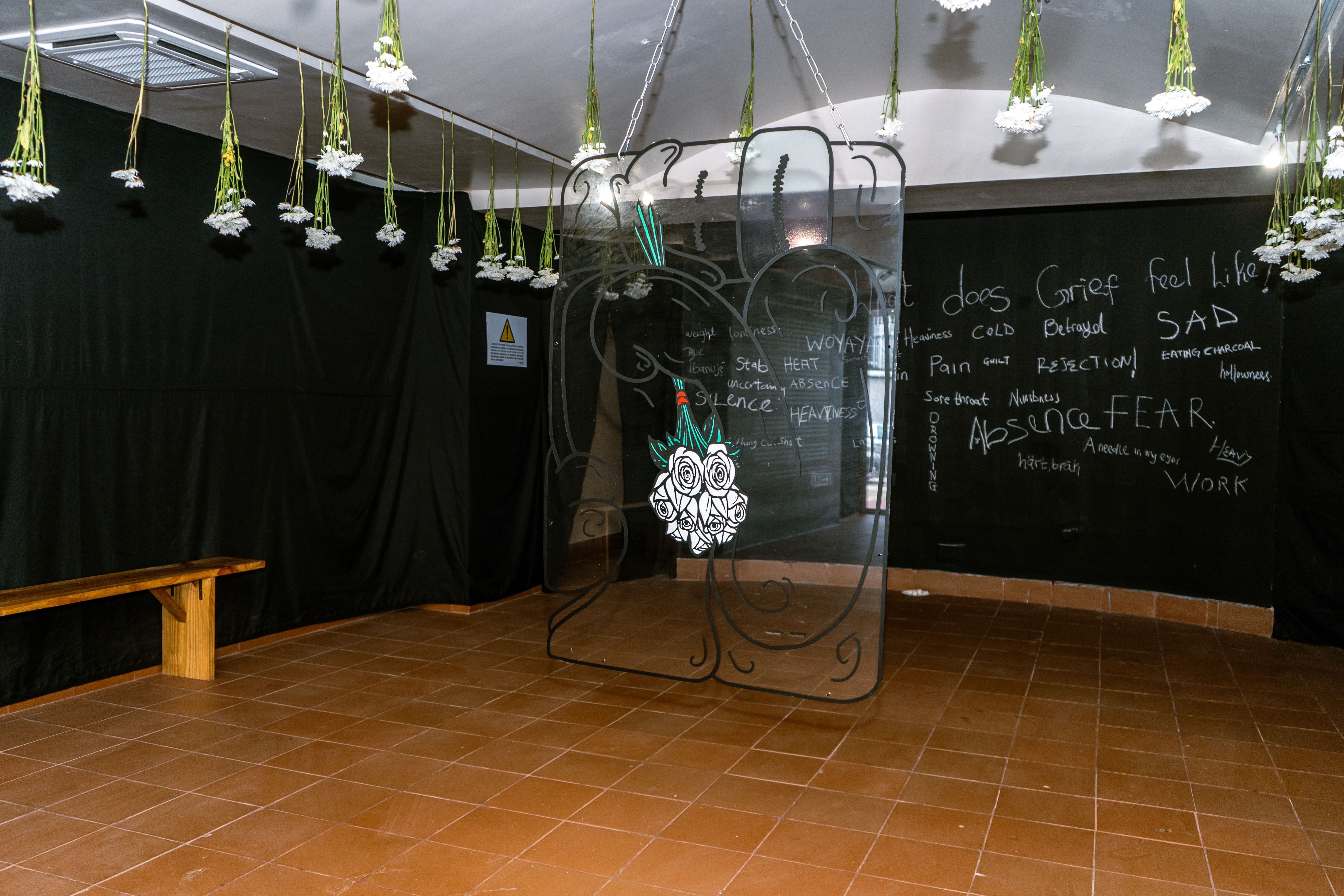
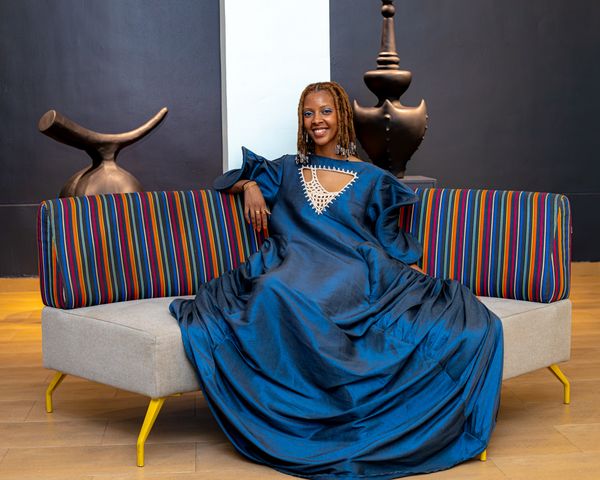
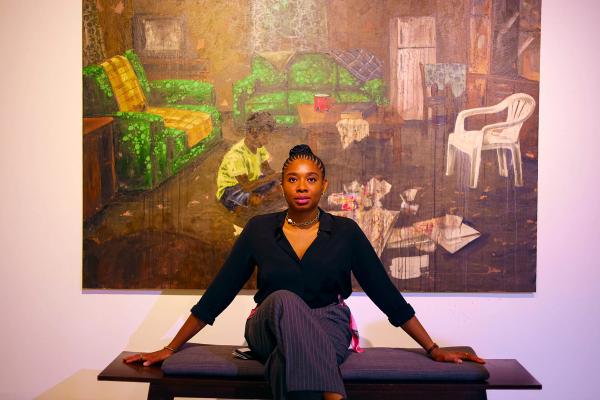
The exhibition was curated by Mary Osaretin Omoregie, a curator at CCA Lagos. The exhibiting artists are Blessing Bulus, Daniel Oruwhone, Lovelyn Tijesunimi-Israel, Ofem Ubi, Ololade Lawal, Oyewole Lawal, Taesirat Yusuf, and Yusuff Aina. Opened on National Grief Awareness Day, August 30, this show presents recognisable aspects of grief and what they do to us as humans.
Here, Mary shares her thoughts on curating Ka ọ dị mgbe anyi g'afu ozo—Until We Meet Again for CCA Lagos.
Rejoice Anodo (RA): Ka ọ dị mgbe anyi g'afu ozo opened on August 30, globally recognised as National Grief Awareness Day. This framing seems deliberate. What made CCA Lagos decide to stage an exhibition on grief?
Mary Osaretin Omoregie (MOO): The idea came two years ago, when I was thinking about how dicey grief is: we all encounter it, but not in the same way or through the same lens, and it is rarely given sustained space in our cultural context. We know how to gather around loss, but we don’t know how to remain with grief. So we asked what it would mean to stage an exhibition that embodies grief and looks at it from different angles: not just death, but the loss of friendship, of memory, of much else.
We wanted a space for remaining, where people could confront the subject and live through it. The exhibition seeks to interrogate grief, not just as a personal act, but as a performative negotiation of culture, identity, and language. We didn’t want to treat grief as a problem; we wanted it to be an experience people can live with, revisit, and understand over time. We chose the date last year because many people don’t know that 30 August is National Grief Awareness Day and we wanted to create awareness.
RA: The title of the exhibition is derived from the Igbo language and translates to “until we see next time,” a phrase that depicts a temporary parting rather than permanent loss and so creates room for reunion. Why is ‘reunion’ implied in a conversation about grief?
MOO: We chose the title because we wanted culturally specific language for the fact that someone’s death is not the end of our relationship with them. In our traditional African belief system, people don’t die completely. This world is a marketplace, and we will all go back home. There’s a phrase in Yoruba, “Ayé l’ójà, ọ̀run n'ilé”, which translates to “this world is a marketplace; our final destination is heaven.” The title resists death as finality. It is not a denial of loss; it gives absence a different language.
We are not certain of reunion after death, but we can imagine it through memories, rituals, places, and stories passed down through generations. We are also interested in that tension: how can someone be absent and present at the same time? Grief is not only about death; it is also about the ways people maintain relationships with the deceased after the physical separation.
RA: How do you curate for both discomfort (caused by grief) and comfort (caused by the possibility of reunion) in the same space without letting one overpower the other?
MOO: From the beginning, we knew this would be an uncomfortable exhibition. Through the selection of the works, the studio visits, and the conversations with the curatorial team, we ourselves struggled with our feelings. Grief is heavy and uncomfortable, and we didn’t intend to contradict that. We focused on creating a space where people could confront this discomfort without feeling overwhelmed. From the works to the design and the programming, we set it up as an invitation to come in, feel, and respond to the works on display. We partnered with the Rose of Sharon Listening and Support Center to help people navigate these feelings. We expected it to be heavy, but we didn’t expect a flood of emotional responses. We’re glad the exhibition served its purpose.
RA: Grief is universal, but it is experienced differently according to gender, culture, religion, and circumstance. Did you consider these when selecting artists for this show?
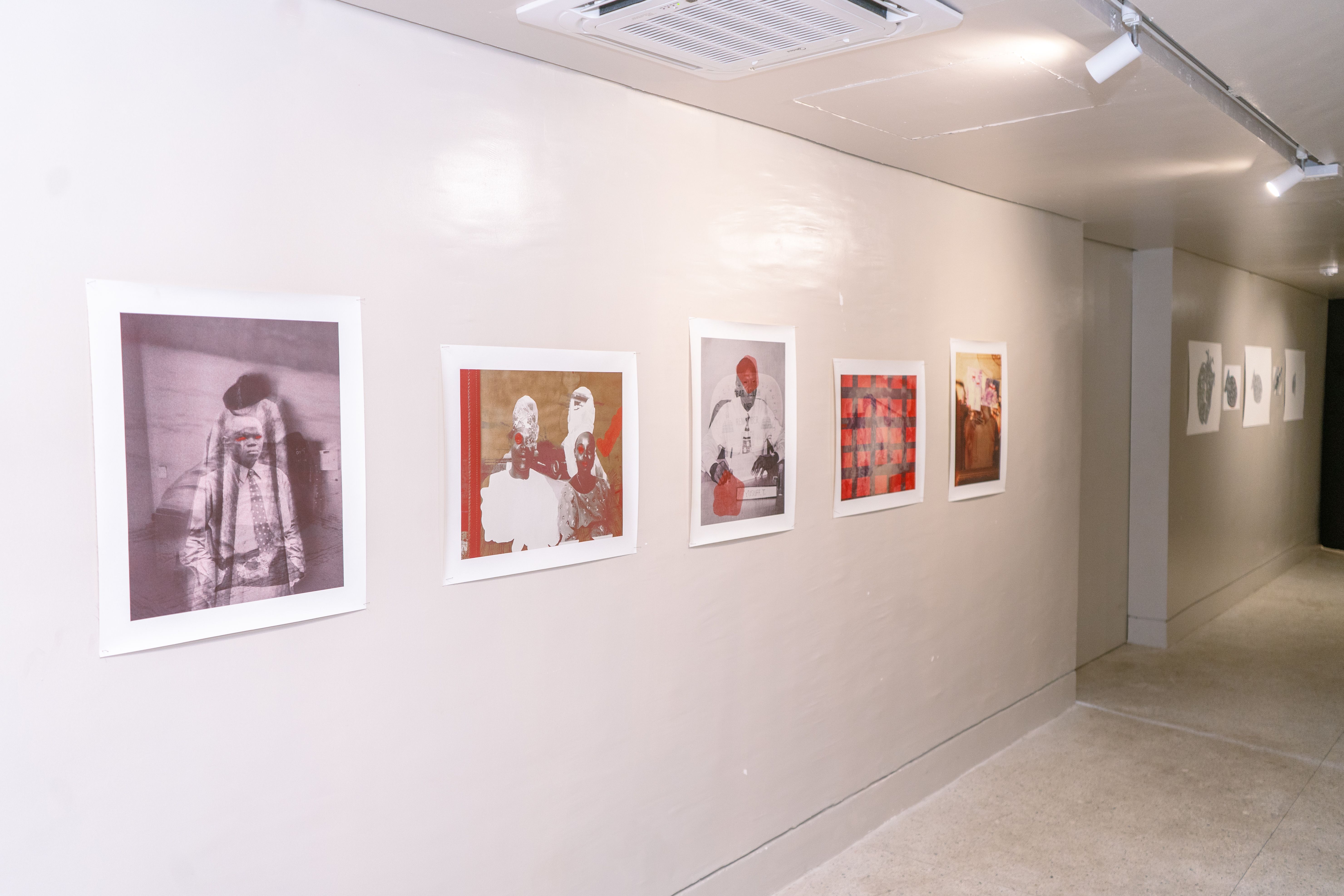
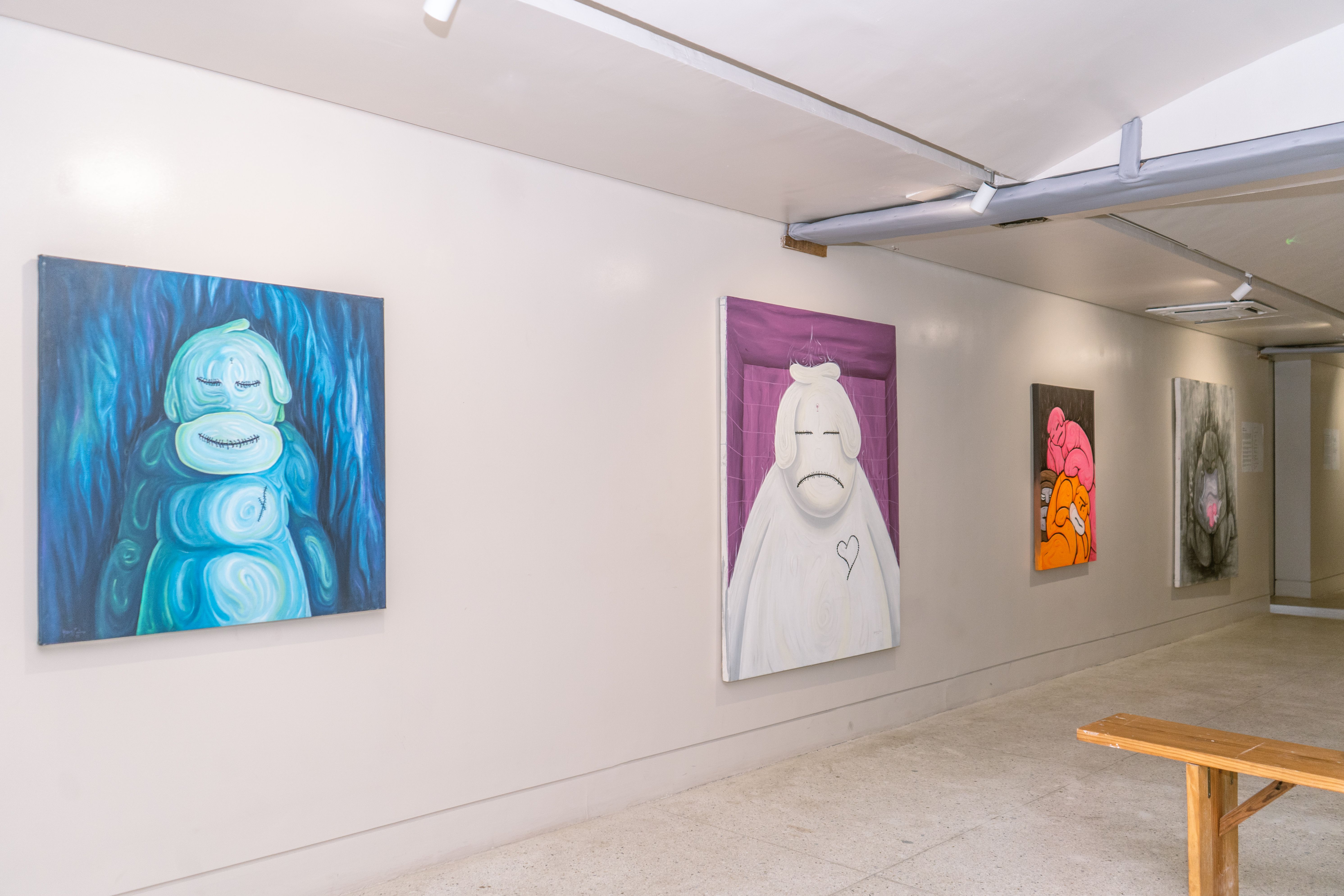
MOO: Absolutely. The idea that grief is universal can obscure the fact that the way it is experienced differs. We wanted the exhibition to acknowledge these differences without flattening them. We wanted to show how religion, gender, and social position shape the way people mourn. We wanted to understand what forms of grief society considers legitimate. When you look at the works, you’ll see that they approach grief from different perspectives. Lovelyn’s work is on loss of friendship. Oyewole’s work is on a memory he never had. We selected artists who could show these different stories of grief across different cultures.
RA: Were any of the participating artists chosen because of a personal relationship to grief?
MOO: Yes, although it was not a criterion in the artists’ selection. We were more interested in how each artist’s practice could open up a new way of thinking about grief. When I met each artist, I told them, “I need you to be experimental.” I wanted them to approach this from a personal and relatable perspective. I have worked with them before, so I knew they’d be up to the task. While speaking with Taesirat, a medical doctor, I learned that grief has a smell. ‘Doctors can smell it,’ she told me, when someone is about to die. I suggested involving this in the show, and she was excited to bring it to light. That conversation was two years ago. Unfortunately, she lost her father in the interim and decided to work on his remembrance instead. The entire project focused mainly on the architecture of loss.
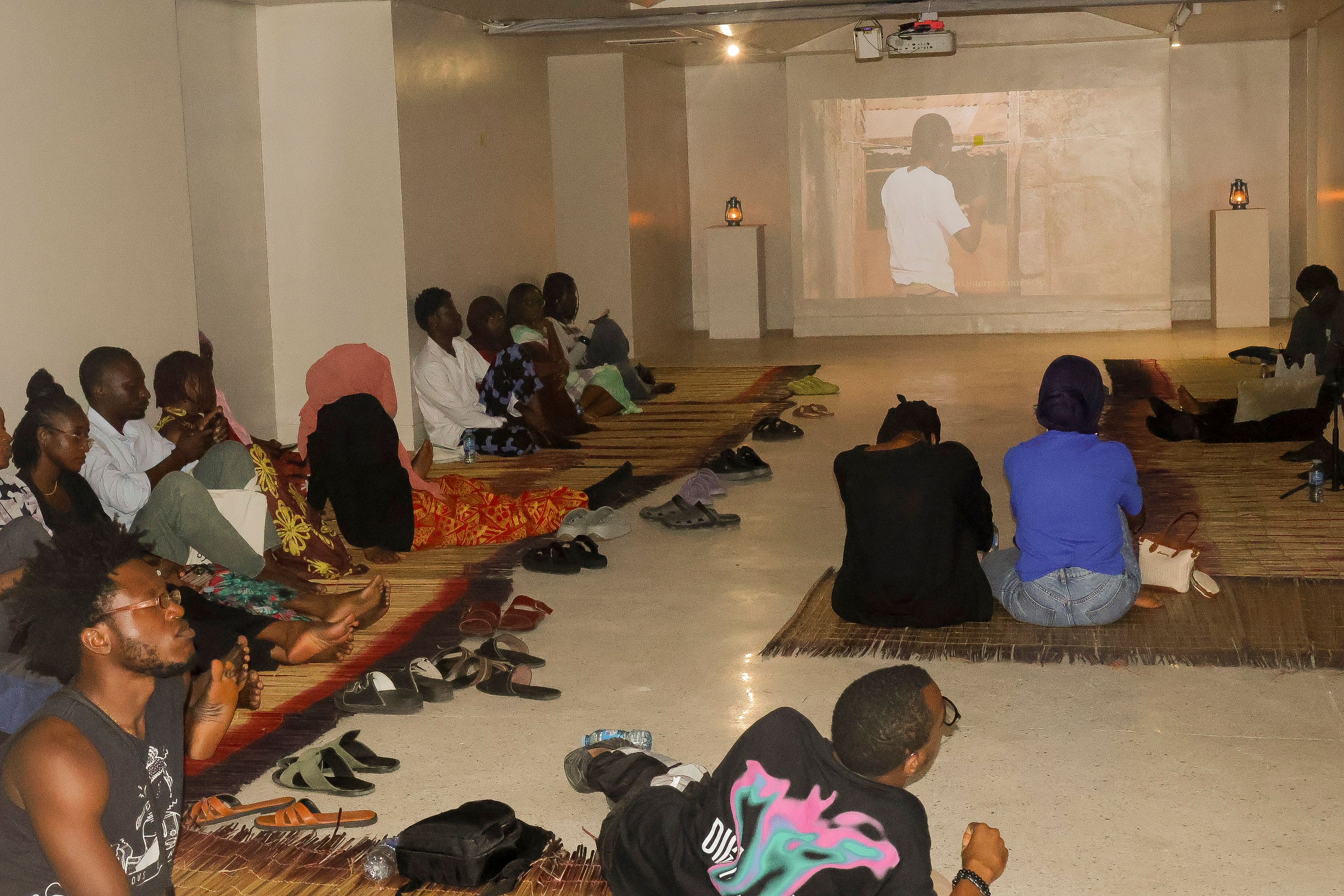
RA: The pre-programme screening of Ofem Ubi’s Back on Home Soil took place before the exhibition opened. What did you want the film to prepare visitors for before they encountered the main show?
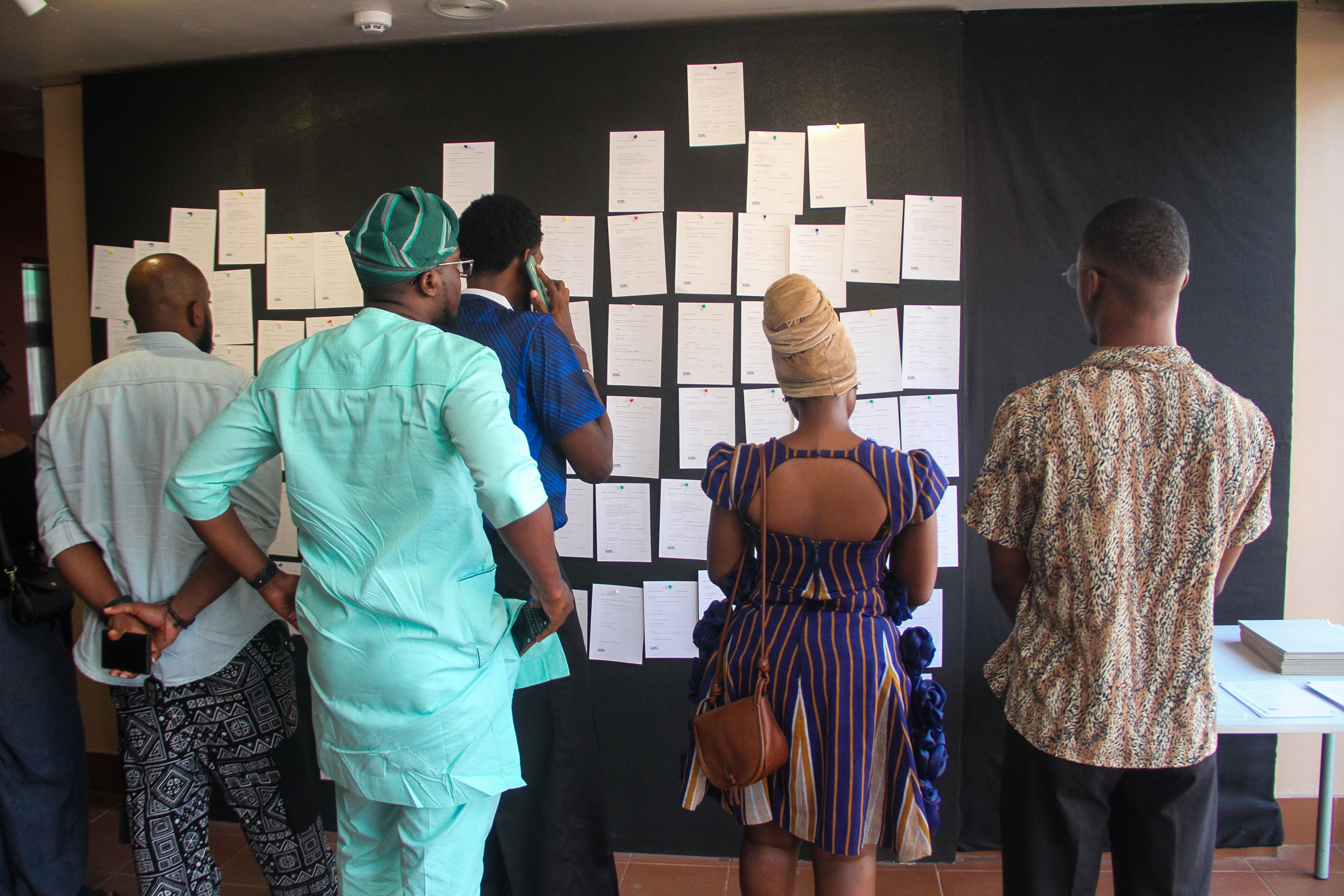
MOO: Ofem’s film is a brilliant work on memory, belonging, and return, and on how we confront grief. The screening was not an introduction to the exhibition; it was an entry into some of the themes it raises. We selected it because I strongly believe exhibitions are not just about opening and closing dates but about the experience. Our main focus was the audience; the works on show were an entry point into the conversation. We invited viewers to watch the film and respond to a questionnaire, kept on the ground floor opposite the curatorial statement. We collected oral and written responses and added them to the exhibition.
RA: Why is a session with psychologists part of the exhibition programming?
MOO: Including psychologists was intentional; it was a form of care. We acknowledged that an exhibition about grief should not pretend that art alone can resolve or contain every part of the subject. We are not psychologists and do not have the professional knowledge to navigate these things. We also have a responsibility: when we invite people into a vulnerable and emotional space, we should care for what happens when they become vulnerable. The listening centre handles the session as professionals. We do not offer it as therapy, because the gallery is not a clinical space. We invited the centre’s psychologists to help us think collectively about grief, recognising that professional psychological support is very different from artistic and communal forms of processing grief. The session, The Boxed Emotion, will include letter-writing sessions and conversations around grief.
RA: Do the post-programmes aim to help visitors process what they experienced in the exhibition, or do they offer a standalone approach to grief?
MOO: I think both. The exhibition is a space for conversations to emerge and for people to respond, and the post-programmes continue the conversations it has started. This show is peculiar: when you enter it, it stays with you, you think about it, and it resonates. We’ve had people share how it made them feel about grief as an uncomfortable subject. The post-programmes also create space for conversation beyond the works themselves, for people who cannot come to terms with grief through the exhibition to do so through other forms of dialogue.
RA: You’ve described curation elsewhere as a form of care, an intimate and iterative process of mutual understanding between curator and artist. How did this shape the way you worked with the artists on a subject as personal as grief?
MOO: Curation is care, and I wanted this ethic to be reflected in the exhibition. On an exhibition of this nature, we needed to be intentional, which meant listening attentively to the artists. We didn’t want their experiences to become mere material, pieces kept for display. We paid attention to boundaries; we wanted them to share without discomfort. They trusted us and shared their stories. Curators can be very ambitious, like artists. What happens when two ambitious people work on a project? We knew compromises needed to be made, and this understanding made the process smooth. Care in this curatorial project meant making space for contradictions, silence, and incompleteness to coexist.
RA: African feminism, community engagement and archival representation are your core research interests. Did they show up in this exhibition? If not, how do you explore them in your practice as a curator?
MOO: They showed up, but as undertones. Working as an African feminist has taught me to pay attention to which stories are told, whose experiences are valued, what forms of knowledge count, and how universal experiences are shaped by particular social realities. Community engagement is obvious in this exhibition because we set it up for the audience. Archival representation is present in the way grief produces its own archives, from photographs and letters to objects, memories, and rituals, even voices and stories, across all the artists’ works. These are not neutral records;they are how people negotiate what and who is remembered. All the works are archival materials. My interests are less separate research categories and more interconnected ways of asking how we remember, who gets remembered, what is remembered and what forms of memory survive.
RA: Did your personal experience of loss ever affect the curation of this show directly?
MOO: My personal experience prompted the idea, but it did not become the centre of the exhibition. I was careful not to let that happen. It made me sensitive to the subject, but it did not determine how other people’s grief should be understood. It taught me that there are limits to my experience, and that the show needed a holistic approach.
RA: CCA Lagos was founded to prioritise the under-represented visual art media in Nigeria. Where does this exhibition fit into that founding vision?
MOO: CCA Lagos was created as a space where practices and conversations without adequate representation in conventional institutional frameworks, especially in Nigeria, can thrive: sound, installation, performance, video and other non-conventional art forms. That is exactly what we did in this exhibition. Three of CCA’s founding beliefs found their way into it: experimentation, education, and community engagement. The artists stepped out of their comfort zones, and the show extends CCA’s commitment to prioritising non-conventional art forms. We also wanted to connect this to our founder, Bisi Silva, and to how we responded to her death, individually and as an institution.
RA: Looking beyond this exhibition, what unfinished work do you see CCA Lagos taking on to shape how contemporary art engages with difficult and personal subjects like grief?
MOO: The unfinished work, I think, is learning how institutions and practicesfare beyond the duration of an exhibition. We often think about exhibitions through timelines, but experiences like grief, trauma and loss do not respect institutional timelines. What responsibilities do institutions have after the audience leaves and the exhibition closes? I would like to see more sustained conversations around difficult subjects, because they resist resolution, and I would invite other art institutions to keep asking about experiences that may not be resolved.
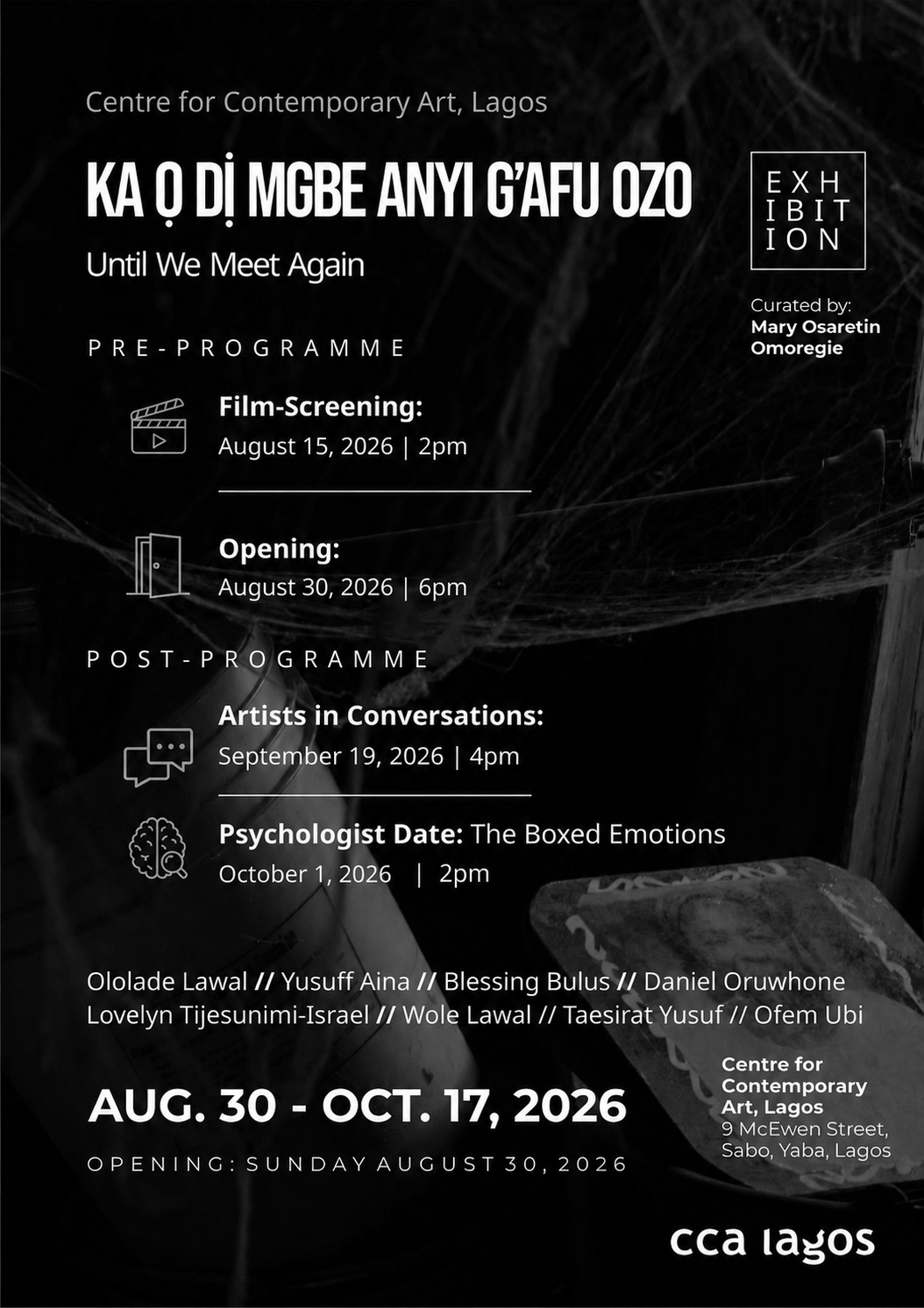
Ka ọ dị mgbe anyi g'afu ozo – Until We Meet Again opened on 30 August and runs at CCA Lagos until 11 December 2026, originally scheduled to end on 17 October 2026.