Borders and Other Myths: In Conversation with Laura Twagirayezu
Laura Twagirayezu on being Rwandan, remote curation, Africa’s post-colonial realities, and Borders and Other Myths at Affinity Gallery.
Rejoice Anodo
Chief Editor
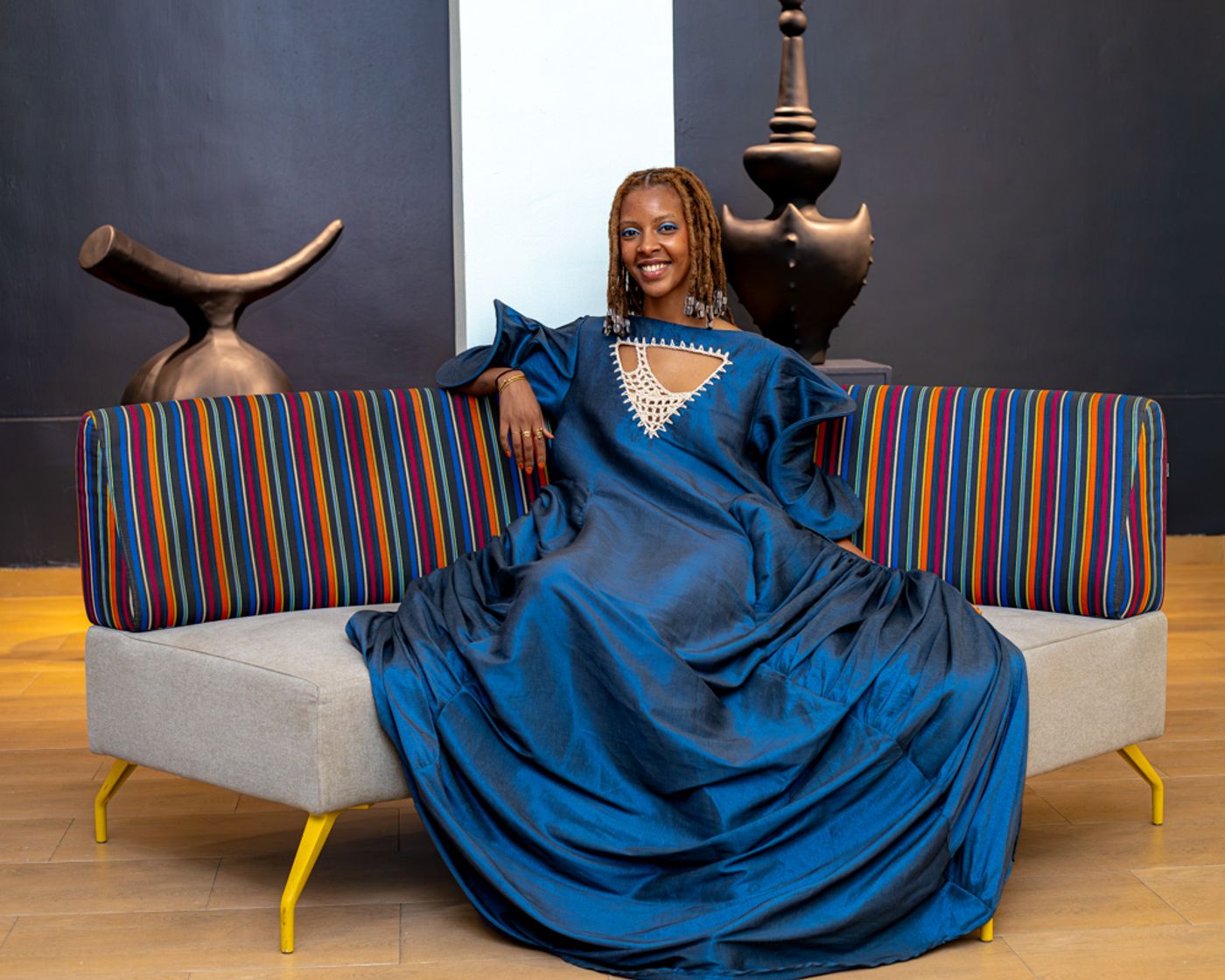
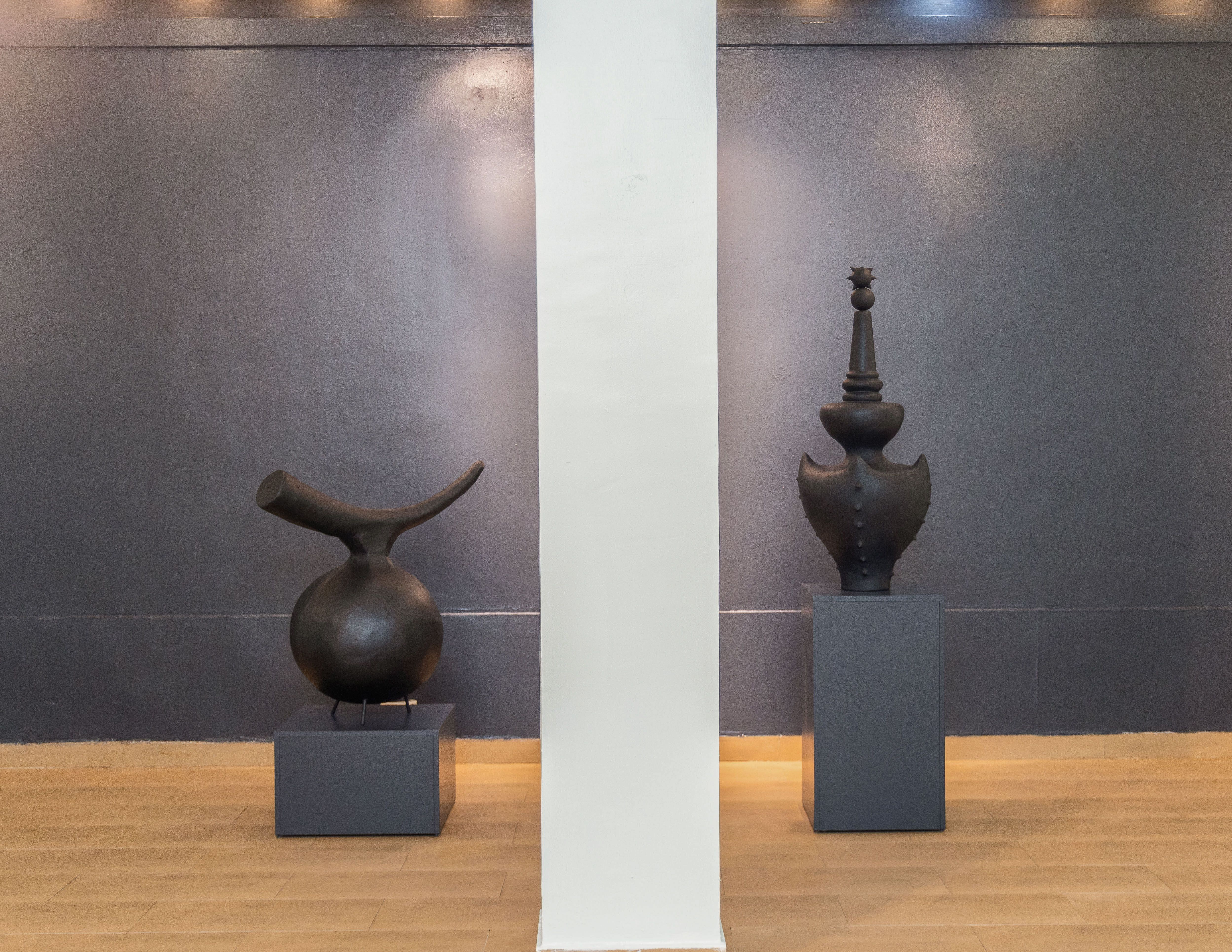
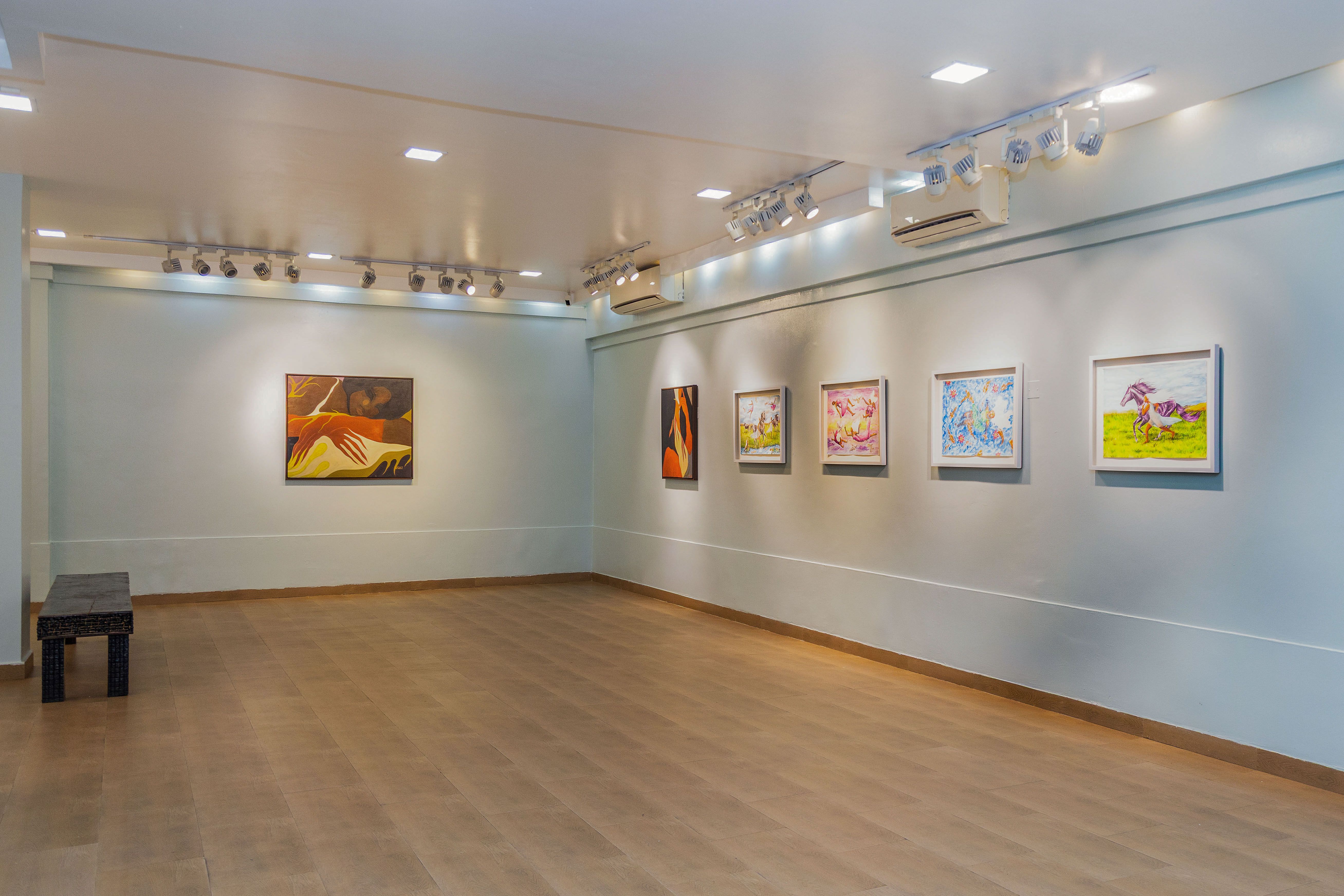
On the 13th of September 2026, Affinity Gallery opened its doors in Victoria Island to the city of Lagos for the debut of Borders and Other Myths, a group exhibition featuring Chigozie Obi, Ernest Amabibi, Hamed Maiye, Carine Mansan, Cortney Herron, and Myles Igwebuike. Spanning three floors of the building, varying sizes of sculpture, photography, and painting by these artists were masterfully arranged by Laura Twagirayezu.
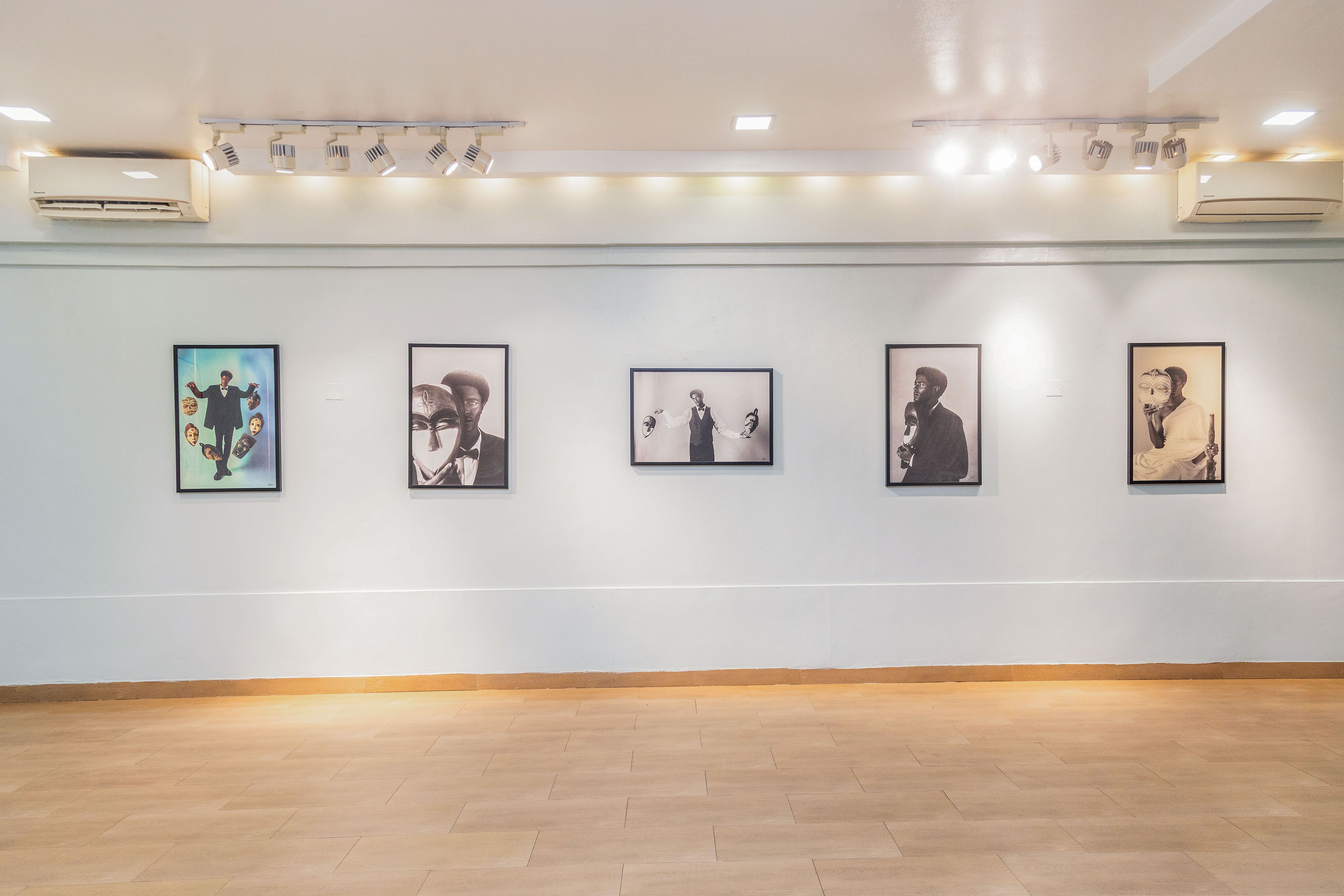
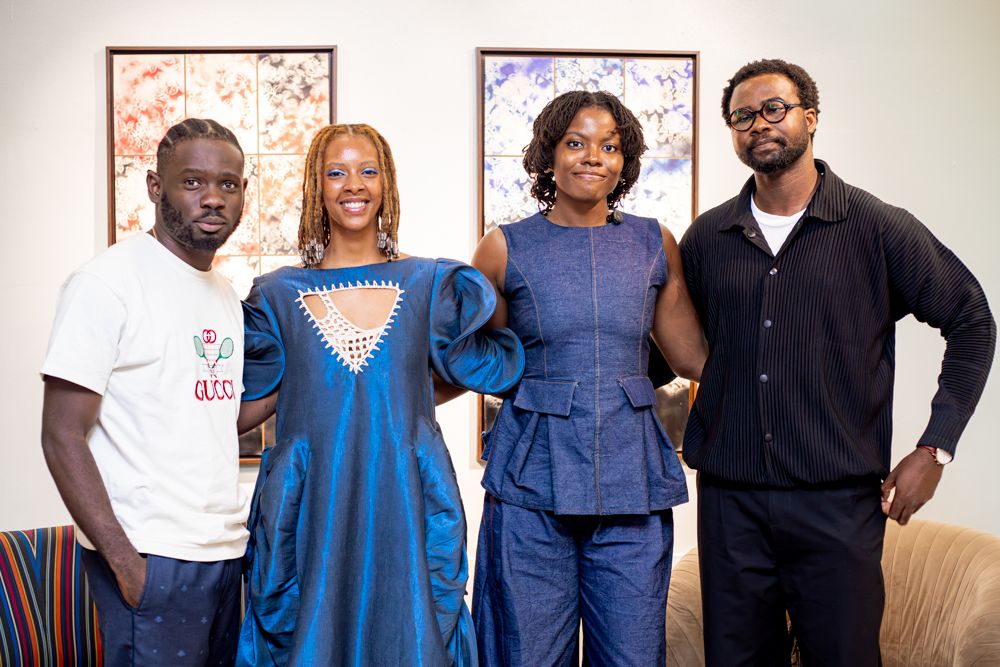
Laura – curator, entrepreneurial professional, and founder of UMUTI:MA – is Rwadan and based in Dublin. In Borders and Myths, her curatorial focus spotlights embodied cognition in Africa caused by geographical borders spawned from the Berlin Conference and myths as African folklore and imposed beliefs.
In this session, she talks about her origin, virtual curation, Africa’s post-colonial realities, and quite literally: borders and myths.
Rejoice Anodo: Your curatorial statement traces the concept of borders back to 1600s Europe and the 1800s Berlin Conference. Why was it important to root the exhibition in that specific historical genealogy before moving into the artists’ individual practices?
Laura Twagirayezu: It was important for me to draw back to our collective history, as nothing happens in a vacuum. And ultimately the exhibition attempts to reflect on our current condition (our post-colonial realities); the current state of affairs when it comes to travelling the African continent as Africans is a direct result of many things, including colonisation.
Firstly, the exhibition explores the concept of borders in the African context, referring to them as non-singular, not eternal, constructed lines that took root mentally, socially, and psychologically before they could manifest physically. The concept of a border was first created in the 1600s in Europe, with a shift from controlling people to controlling territories through the concept of sovereignty. These borders went on to be imposed on the African continent with the Berlin Conference in the 1800s.
RA: You describe borders as having “took root mentally, socially, and psychologically before manifesting physically.” What made you want audiences to encounter that internal dimension of borders before the political one?
LT: I'm very fascinated by how people, how individuals, perceive the world around them! It's a very internal dimension, as you've put it, and this is a personal and intimate part of people that I want to speak to. This curatorial note for me is an invitation to think a little bit more and a little deeper about one's internal world, one’s personal beliefs, collective beliefs and everything in between – hence the 'Myths' in the title of the exhibition.
Myths and folklore stories are extremely powerful because of our ability to imagine the fantastical. In the same vein, part of the success of colonialism was in its ability to affect our ability to dream as Africans and Black people in the diaspora. I strongly believe that our ability to dream is directly connected to our ability to self actualise (which I interchange with self-mythology).
The exhibition’s invocation of the “myth” is equally deliberate. Traditionally, myth refers to a sacred or culturally foundational narrative through which communities make sense of origins, nature, morality, and existence. In modern usage, however, the term has also come to signify a widely accepted but untrue belief. If borders are presented as permanent, natural, and inevitable, then perhaps they too function as modern myths: narratives that acquire authority through repetition, despite the historical contingencies of their construction.
RA: The show pairs “borders” with “myth” quite deliberately: myth as both a sacred foundational narrative and as a widely accepted myth. What was the moment you realised those two meanings could sit inside the same exhibition?
LT: It took me a while to decide on a title! I was stuck for a couple of months. I kept writing words that I felt were important to the narrative. But after many trials and errors, this came together beautifully. I love the idea of juxtaposing ideas, and this felt like the perfect parallel.
RA: You cited Bantu migration as an example of relationships that borders cannot contain. Why was that particular history the right anchor for the exhibition’s argument?
LT: I'm from Rwanda. My native language, Kinyarwanda, is a Bantu language, and as I travel and live in different places, I always meet people from different African countries whose native tongue has similarities with mine! Mostly with my friends from South Africa and Zimbabwe, there are so many overlaps in our languages, but it was only when I was doing research for this exhibition that I found out the Bantu people came from the Nigeria/Cameroon area. It felt like a nice full-circle moment.
Yet borders have never been entirely successful in containing movement, memory, or cultural affiliation. They may reorganise territory, but they cannot fully delimit the relationships that traverse it. The history of Bantu migration offers one such example: populations originating in regions of present-day Nigeria and Cameroon dispersed across vast areas of the continent, contributing to complex networks of linguistic and cultural exchange. The contemporary map, therefore, tells only one version of the story. Beneath its apparent permanence lies a much older and more fluid geography of movement, exchange, and relation.
RA: You brought six artists stretched across different cities across the globe. Were you looking for geographic and disciplinary range from the outset, or did this materialise organically?
LT: I absolutely wanted the range; I think it feeds really well into the theme. I am so happy that each artist explores a specific part of themselves. Carine, Chigozie and Cortney all explore their internal worlds but from very different angles, while Ernest, Hamed and Myles explore cultural heritage, family history and legacy, and finally craftsmanship. This for me is what drives the point home of borders being mythical, as they were made up but also drawing on the agency and power that we all have as people to alchemise our reality.
RA: How did you handle working with artists spread across four countries? More specifically, how hands-on was your process in terms of studio visits, dialogue and remote curation?
LT: I've been curating for over 5 years now, and it's only in the last two years that it has been in person. Most of my work with art started at a distance across different time zones, so this wasn't too bad, and thankfully technology really facilitates working at a distance. My process in selecting the work was quite straightforward. I ask the artists to share pieces they believe resonate with the theme, and I get to make a final selection from their first draw.
RA: Affinity Gallery has recently held shows like Cosmic Inheritance and What Shaped Us Does Not Disappear, alongside Borders and Other Myths. Is there a thorough line connecting these exhibitions in terms of what the gallery is trying to build?
LT: Funny enough, I was wondering the same thing when I was working on my concept! I think it would be a great question to ask Olu, the gallerist. But as of now I really think that we all have similar questions and musings when it comes to our personhood… think of sonder, we are having this human experience. kind of in similar ways, but not quite... but I’d love to know too.
RA: What do you see as Affinity Gallery’s specific role in Lagos’s gallery ecosystem?
LT: I see the gallery as a place committed to developing the art ecosystem in Lagos and globally, to be honest. I say the art ecosystem because for art to exist and thrive, there are many components required for this. From curators to gallerists to gallery managers to artists, everyone involved in the art world needs to develop their skills, and there is no better way to grow than to actually get an opportunity to work. This is my first exhibition of this scale with an established gallery, so I am not only a huge fan of their mission and work, but now I am also a product of their work and the infrastructure they have created.
Their focus on female artists is commendable, and this also trickles down to the gallery's team! I'm excited to see what they have in store for Lagos and the rest of the world.
RA: Some of the exhibiting artists have shown internationally: 1-54 Marrakech, Tate Britain, AKAA Paris. What does this mean to bring this calibre of artists into Lagos, rather than out of it?
LT: Through my nomadic gallery UMUTI:MA, my goal is to curate at least one exhibition on the African continent per year. It is so important for me to be able to share this beauty (art) with people at home (on the continent). My commitment and devotion to art is to the African, Black and Caribbean people on the continent and in the diaspora globally; not only to showcase their work far and large but also to come to them and to engage with them in real life and in real time face-to-face.
RA: Looking beyond Borders and Other Myths, what do you want Affinity Gallery to be known for in the coming years?
LT: Quiet as kept, Affinity Gallery is already known for thoughtful curation and a commitment to African artists, especially female artists! I am looking forward to it being an incubator for artists and other professionals in the art world, as well as its wider reach across the world and across the African continent.
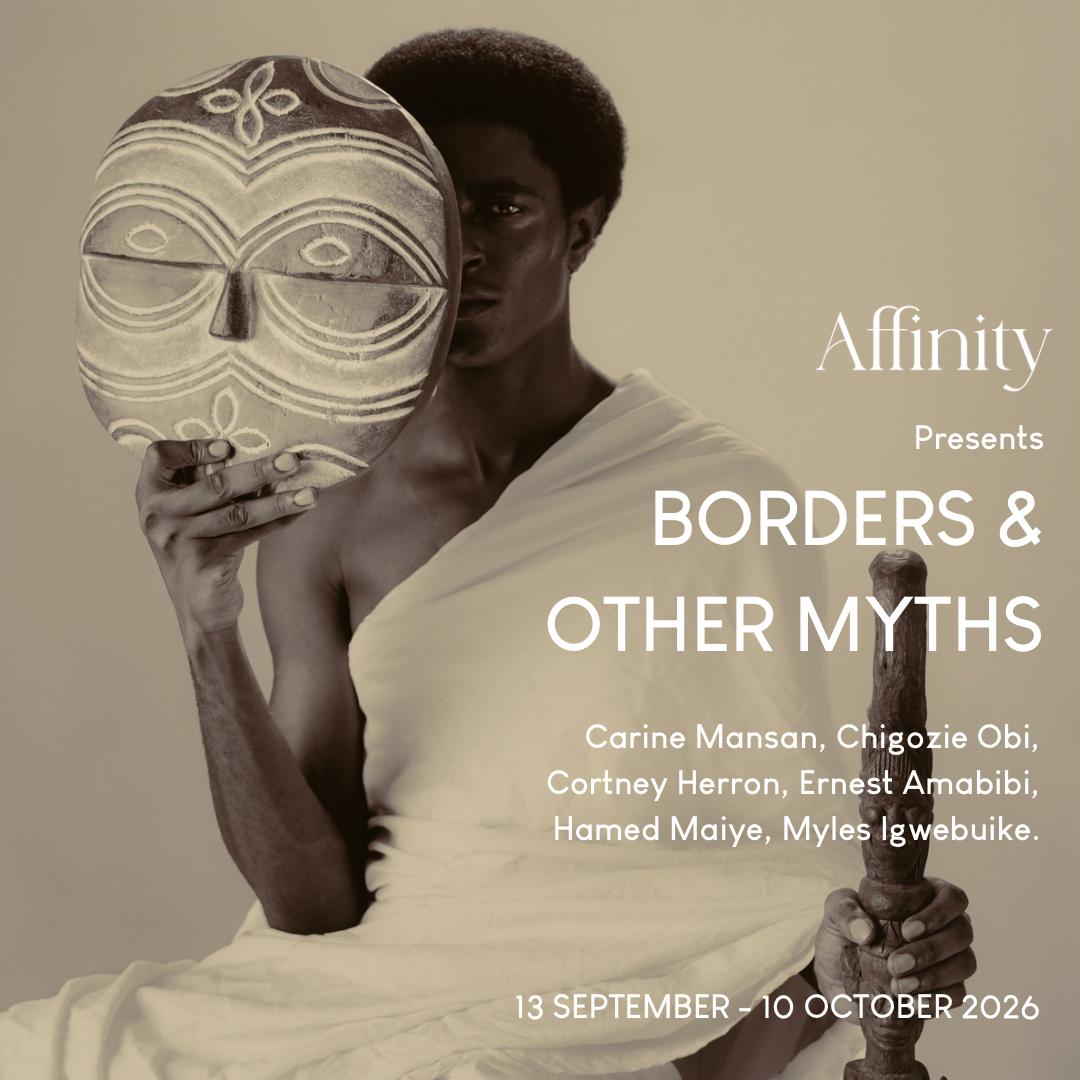
Borders and Other Myths is currently showing at Affinity Gallery until October 10, 2026.